Adopted into the family

I wonder if there’s anyone in your family who was adopted? My grandmother Vera was adopted and her birth and early life were always a mystery, as records were not always kept or made available. Despite the uncertainty about her origins, Vera was always loved and was always part of the family.

In the letter to the Ephesians, Paul is writing to a community of Christians who are mostly Gentile, that is, non-Jews. He begins the letter with a grand prayer or poem that outlines the many blessings we have received from God through Jesus Christ. One of these blessings is to be adopted into God’s forever family and to be known as God’s children. For Paul, this is one of the great mysteries of the gospel message, that the privileges once bestowed on the Jewish people are now freely available to all. And one of the most significant of these privileges is to be considered God’s children. This honour is ours through grace, one of the key themes of this letter. We did not earn this privilege – rather it is a gift – along with forgiveness and acceptance. Grace is the unique aspect of Christian faith that no other religion offers. We don’t have to strive or become anxious about pleasing God – we are accepted as we are. But we are re-created in Christ to be people who want to follow God’s ways and embody God’s character of love and justice. We’re part of God’s family and so are called to reflect this in how we think about ourselves and in how we live.

The challenge of leading in the easy times

When it comes to leadership, is it more difficult to lead during times of crisis or when things are going well? Certainly the public scrutiny of leaders is high when times are tough … think of the focus on State and Federal government leaders during the Covid pandemic with their daily press conferences and rapidly changing health guidelines. Every comment and every decision is reported and analysed and awkward questions are asked. Tough decisions need to be made under real time pressure that won’t please lots of people.

Tough times don’t last forever, thankfully, and eventually easier times will return where there is less attention on leaders. These easier times allow focus on the important rather than the urgent, for leaders to be proactive rather than reactive. But I wonder if it’s actually harder to lead well when people aren’t watching so closely … since complacency can set in and decisions can be made by routine or habit.

King David was a strong and effective leader for tough times. He was a courageous and shrewd soldier. Yet his most glaring failures happened when he was taking some R&R time. While the army is off fighting Israel’s enemies, David is relaxing in Jerusalem. He spots a beautiful lady bathing and in quick succession, he desires her, enquires after her and brings her to the palace where he has sex with her. Was in consensual? We’re not told. More likely, it was a powerful and entitled man taking what he wanted. It gets worse. When the woman, Bathsheba, becomes pregnant, David conspires to have her husband killed in battle and he then takes Bathsheba as his wife.

So David dismally failed the challenge of leading in the easy times. He became distracted by seeking after selfish pleasure and lost his moral compass. His integrity failed when no one was watching. There is a lesson for all of us here. We all have weak spots where we can be tempted. It’s why there is a line in the Lord’s Prayer that says ‘save us from the time of trial and deliver us from evil’. May God give us strength to act righteously even when no one is looking – and grace when we do stumble and fall.

Leaders and vision

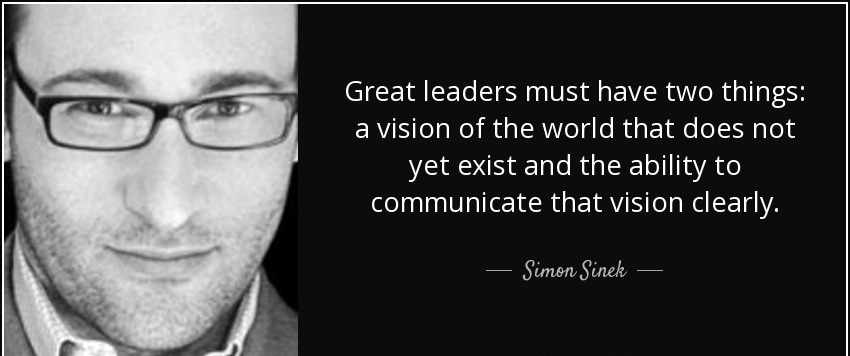
One of the most challenging tasks of leaders is to articulate a vision for the future, communicate how we will get there and then to persuade people to follow. Our current crop of Federal Government leaders are fairly dismal at this task, whether providing a clear vision and goals for Covid vaccinations, or about tackling a longer term issue such as climate change. The latest mantra that Australia should reach zero carbon emissions as soon as possible and preferably by 2050 illustrates the point. It is not a vision that motivates anything, it has no plan for how to achieve the goal and it persuades no-one.

Compare this to King David and his vision to build up the city of Jerusalem including a temple, or house, for God. This was a fairly grand vision that sought to provide a central place for worship as well as uniting the tribes of Israel. (We’ll set aside David’s theology that believed God could be contained to a single place and a single building …). God in turn takes this vision and makes it grander still. God will instead build a house for David, an everlasting kingdom or dynasty to arise from his offspring. This vision sustained Israel for over 400 years until Jerusalem was destroyed by the Babylonians and the last king carted off into exile.

The vision lived on, however, for a new David, a Messiah, to raise up the tribes of Israel once more. Many people wondered if Jesus might be the hoped for Messiah. And Jesus did speak a lot about the kingdom, the kingdom of God, which was his central vision. This was not an earthly kingdom, however, with a king ruling on a throne in Jerusalem, but rather a kingdom that reigned in people’s hearts where they followed God’s ways of justice, compassion, forgiveness and mercy. This vision was simple and memorable and has inspired millions of Jesus’ followers down through the centuries.

Articulating a vision remains an important role for good leaders, but as Christians we already have a compelling and clear vision, given to us by Jesus, which is to build God’s kingdom through our witness, worship and service. It’s a vision that excites, motivates and guides what we do.


Leading when the going gets tough

I wonder if you’ve had to fight any giants recently? Or nearly drowned in a storm at sea? Probably not, yet these two well-known stories from Scripture – David and Goliath and Jesus calming a storm – have much they could teach us. In particular, as part of our series on leadership, these stories have some challenging insights.

Saul was king over Israel yet he – along with the rest of Israel’s army – is terrified by the physical size and presence of Goliath. He doesn’t know what to do. When David offers to fight Goliath, Saul cautions David but allows him to face Goliath anyway, alone. One might conclude that Saul demonstrates canny leadership, letting others fight his battles for him. Or one might conclude that Saul fails dismally in his role as leader and in his duty of care for David.

In the second story, the disciples are crossing Lake Galilee in a small boat at night along with Jesus. When a storm suddenly erupts they panic, and like Saul, do not know what to do. What is their leader, Jesus, doing meanwhile? He is fast asleep at the back of the boat. Is Jesus also being derelict in his leadership responsibilities? When the disciples wake Jesus, he takes charge of the situation, speaks to the waves and the wind, and everything becomes calm.

What might we learn about leadership from these two stories? Leaders will almost certainly face tough situations that they may well not know how to deal with. Both David and Jesus demonstrate an important lesson for Christian leaders. Rather than being paralysed by fear or relying on just our own resources, leaders seek out and trust in God’s provision and wisdom and then show courage by acting. When the going gets tough may we learn to do the same.

How we choose leaders

It’s sometimes said that we get the government we deserve, meaning that if we elect a certain type of person then we shouldn’t be surprised when they act in certain predictable ways. Hence the actions of Donald Trump conform to the type of person that he is. Similarly with Scott Morrison given his background in marketing and spin, where appearance matters more than substance.

Both these leaders would claim to be Christian, which makes the actions of our Federal Government in dealing with a Tamil family from Biloela all the harder to fathom. Nades and Priya and their two girls Kopika and Tharunicaa were arrested in the middle of the night and placed in immigration detention in Melbourne over three years ago and were moved to Christmas Island detention nearly two years ago. What does the government’s treatment of the family over this period, including in the last several days, reveal about the heart of our Federal leaders?

As Samuel reflects on the challenges of choosing a new leader to be king over Israel, he notes that people tend to see only the outward attributes of a leader, whereas God looks at the heart – the place of both emotions and knowledge, wisdom and integrity in ancient thought. Samuel went against cultural practice in choosing David to be king, the youngest of eight brothers, confirming that God saw qualities in David beyond his youthful appearance and inexperience.

So how do we choose leaders? The image above suggests that we often have unspoken biases – regarding gender or age or outward abilities. We may not take the time in prayer to discern other attributes of a person, which may be even more important in the long run, such as the depth of their spirituality and inner life and wisdom to see things through God’s eyes. So perhaps we do get the leaders that we deserve if we don’t look beyond the surface to see what is in the heart of a person.

Why it’s hard to be a leader

Who would want to be a political leader at the moment? Whether it’s Deputy Premier James Merlino and Chief Health Officer Brett Sutton making decisions about Victoria’s fourth Covid lockdown, or Prime Minister Scott Morrison or Aged Care Minister Richard Colbeck trying to answer questions about the slow vaccine rollout in aged care settings. Leadership can be a hard and challenging role, especially when making decisions that will anger or upset people.

Being a leader has always been difficult. Just ask the prophet Samuel … or Moses before him. Samuel had the role of a Judge in Israel, settling disputes between people and acting as a messenger between God and the people. Towards the end of his life, the people rejected this model of leadership and demand that a king be appointed instead. It’s personal and it’s painful for Samuel. He knows how the thirst for power and greed can corrupt any leader and warns the people about the potential dangers a king will bring. But the people eventually get their way and Saul is chosen to be king.

A thousand years later, kingship is a failed institution in Israel, yet the people again long for a king, a Messiah to lead the people and throw off the oppressive yoke of the Romans. They wonder if Jesus just might be the hoped for Messiah, but he resists the temptation to go down that road. When two of his disciples jostle for positions of power under Jesus, he offers a startling critique of leadership by suggesting that those who want to lead must instead serve others.

It’s easy to criticise leaders. We think we could do a way better job. But could we? If we pause for a moment we may recognise that if we follow Jesus’ model for leadership, it will require us to let go of our own ambitions and desires and instead to serve the needs of others. This self-emptying and taking on the mantle of a servant is hard work, and our best efforts will still disappoint some people. So spare a thought for our leaders – whether in politics, or in the church or in the workplace – and remember that it’s a difficult role.

The Holy Spirit – disturber of the peace

There is a scene very near the start of the first Lord of the Rings movie, The Fellowship of the Ring, when the hobbit Frodo Baggins meets up with Gandalf the wizard. According to Frodo, Gandalf has been officially labelled as a ‘disturber of the peace’. Based on the events of Pentecost and beyond, I wonder if this isn’t also a good description of the Holy Spirit.

When we think about God’s Spirit, we’re more likely to think in terms of the Spirit being our Comforter or Helper or the one who gives us peace. Those of us in the Uniting Church might also recall the Spirit coming upon Jesus at his baptism in the form of dove, a symbol that appears in the centre of the Uniting Church logo.

Yet even the dove symbol is also a red flame, reminding us of Pentecost where tongues of fire were seen to rest on each person as a sign of the coming of the Spirit. Fire may provide warmth on a cold night, but fires can also be wild and unpredictable, like the wind which is another symbol of the Spirit that features in the Pentecost story.

When the Spirit comes at Pentecost, the disciples are disturbed, their neighbours are disturbed and indeed the whole city is disturbed. Later in the book of Acts, some Christian missionaries are accused of turning the world upside down. It seems to me that in Luke’s telling of the story of the emerging Christian movement, the Spirit stirs and disturbs and sends people out much more than comforts. I wonder if that is why we are cautious to embrace this day more fully and the ramifications for what it might mean for our mostly comfortable life as the church. Are we prepared to be disturbed and shaken out of our apathy?

Jesus prays for us

This week the church celebrated Ascension Day, the day when we remember the ascension of Jesus to be with God. For the disciples it marked their final physical separation from Jesus and one imagines it was a day of mixed emotions. Before leaving, Jesus had prepared the disciples for his departure as best he could with the promise that the Holy Spirit would come and dwell among and within them and also praying for them and for future disciples like us.

This prayer of Jesus, as recorded in John’s Gospel, gives us a rare insight into how and what Jesus prayed. It is an intimate prayer to the Father but also quite bold. Jesus asks three things of God for disciples – that they be protected from the evil one, that they experience the same close relationship with God enjoyed by Jesus and that they be kept safe by the truth (especially about God’s love for us and about God sending Jesus to us). I wonder what comfort you draw knowing that Jesus still lives in God’s presence and that he prays for you. Given that Jesus experienced some of the best and the worst that humanity could throw at him during his life, he knows what it is to live a human life. He knows the joys and challenges of our life. And he promises to be with us. So when life gets tough, it’s good to remember these truths and these promises.

The mothering nature of God

This Sunday we celebrate Mother’s Day in Australia, the day in the year when we pause to acknowledge and honour mothers and other significant women in our lives. These are the people who brought us into the world, who (in most cases) loved and nurtured us and guided us through life. Being a Mum is not a one day in the year role, of course, but more like a 365 days a year role that lasts for a lifetime.

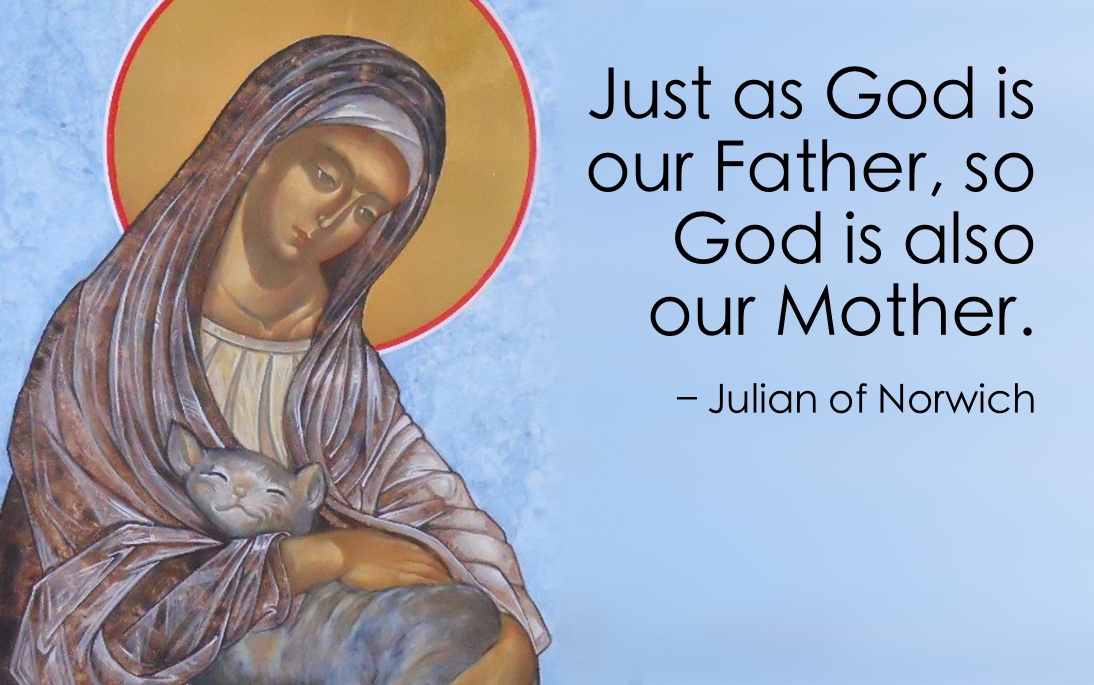
What can mothers and mothering teach us about God, who is nearly always imagined with masculine imagery in the Bible (e.g. Father, Lord, King) and always described with male pronouns? Just occasionally we catch a glimpse of another side of God’s nature, a maternal side if you like – God who brings us to new birth, who nurtures and cares for us like a mother. In the wisdom tradition in the Bible (e.g. book of Proverbs), wisdom is depicted as a woman teaching others about life, justice and mercy, a tradition that appears to have profoundly shaped the ministry and outlook of Jesus and which was probably taught to him by his mother, Mary.

In Genesis we are told that God created humanity in his own image as male and female. So if humanity reflects the image of God, traits or characteristics that we might think of more in feminine terms help us to a fuller appreciation of God’s character – things like compassion, empathy, gentleness. So this Mother’s day let us celebrate those who do and have Mother-ed us (including those who struggle with being a Mum or who were never able to be a Mum or who have a difficult relationship with their mother or children). And let us also reflect how mothers help us imagine what God is like.