Life after Jesus

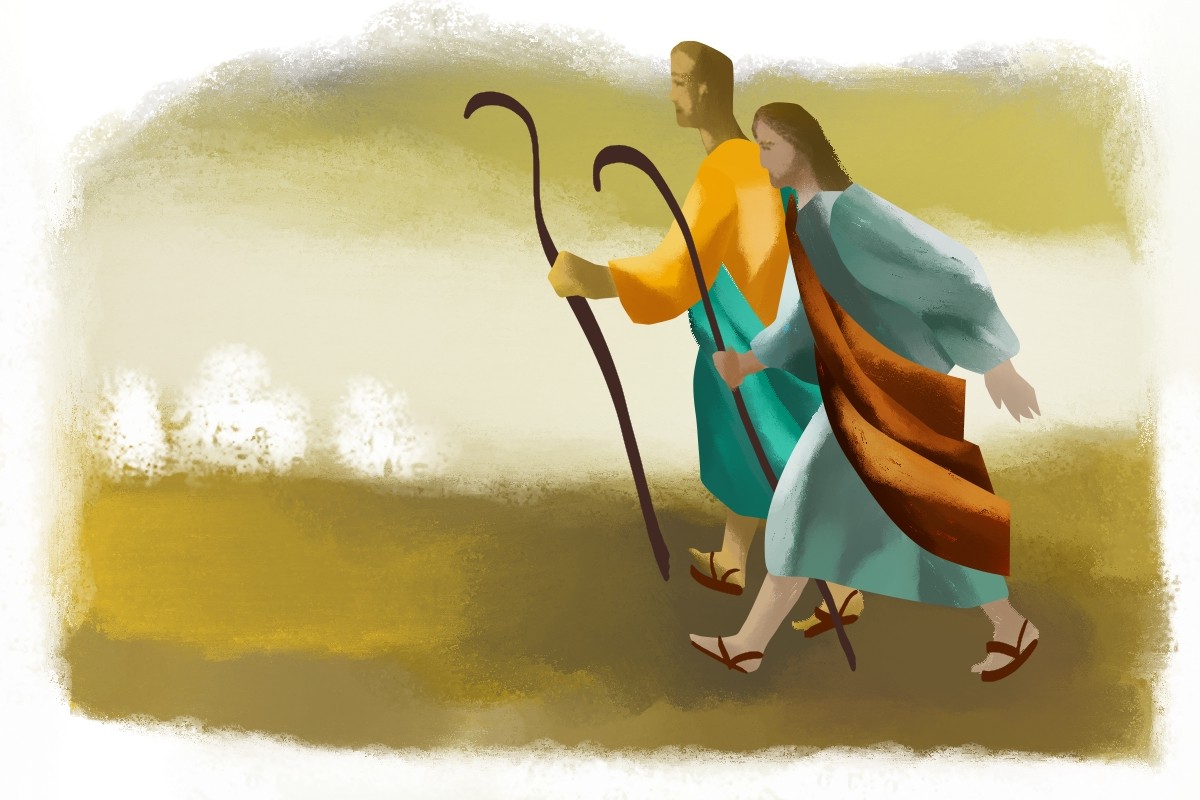
The very first thing Jesus did during his ministry was to call several people to be his followers or disciples. They were to spend time with Jesus and watch and learn from him. One of the very last things that Jesus does is instruct these followers how they are to live and what their priorities are to be when he is no longer with them. Each of the Gospel accounts records these guidelines in some form.

In John’s Gospel these guidelines take the form of a long farewell address that occupies chapters 13-17 of this book. There are several themes that emerge including the call to love one another, the promise of another helper or advocate, the Holy Spirit, to guide and encouragement the community, the call to remain connected with Jesus, the true vine, and the warning that the road ahead will not be easy but rather may well include rejection and persecution. If the community of Jesus’ followers will take on board these key messages they will experience the peace and joy of Jesus’ ongoing presence with them, through God’s Spirit. These chapters are written to people like us, who live in the time after Jesus. Clearly some of these guidelines are easier to follow than others, but all are needed to give a realistic picture of what it is like to follow the way of Jesus. I wonder which of these guidelines comes more easily to you and which you find more troublesome. Do we get to pick and choose?

Remembering ANZAC Day

This Sunday we commemorate ANZAC Day, the day that our Prime Minister Scott Morrison calls ‘the most sacred day of the year’. The government is so keen to promote this day that it has sent a coloured flyer to every household in the country using the above image. In the flyer we are told to remember the courage and sacrifice of those who have served in the Australian Defence Force and how we can commemorate the day at home.

While it is helpful to remember this part of our history – including the large personal cost to individuals, families and communities – the approach taken by the government appears quite hypocritical, parochial and sexist. The photo used, for instance, is supposed to prompt our thinking about the soldiers who have fought and died but features only white males. The flag shown is the Union Jack and is a reminder that the wars Australia has fought in have been instigated by empires on the other side of the world – whether British, American, German or Japanese – and have had little to do with our country (e.g. recent wars in Iraq and Afghanistan). We seem to enter these conflicts at the behest of others and without clear goals of what we are actually trying to achieve.

We are told in the ANZAC Day flyer that these wars have been fought to protect our freedom and democracy. Yet when people flee from conflicts and wars overseas and seek freedom and safety within our democracy, we lock them up like criminals for years and years and deny them the very freedom that we say we value so highly. Likewise we choose to ignore the wars fought on our own soil by indigenous people who died trying to protect their country and way of life from the invading British, our ancestors. So why are some soldiers held up as heroes to be worshipped and others completely overlooked? Perhaps it’s because history is very messy and doesn’t fit easily into the simplistic ANZAC myth.

As Christians our values are shaped by a very different story. While the heart of the gospel story includes the service, suffering and death of Jesus – to which the ANZAC myth is often linked – the wider gospel story condemns violence (as Jesus notes in Matthew 26:52 ‘all who take up the sword will die by the sword’) and calls us instead to be peacemakers (Matt 5:9). The prophetic scriptures of Israel such as Micah 4:1-4 look forward to the nations learning the ways of God – the ways of peace and justice – and turning their spears into pruning hooks and swords into ploughs.

So on ANZAC Day, let us indeed remember the service and courage of those who have fought in the Australian Defence Force, but let us also remember the subversive call of Jesus to be peacemakers rather than to engage in conflict and war. Let us be careful to distinguish between a government supported propagation of a national myth and the reality that our history is far more ambiguous and dark.

Encountering the risen Jesus


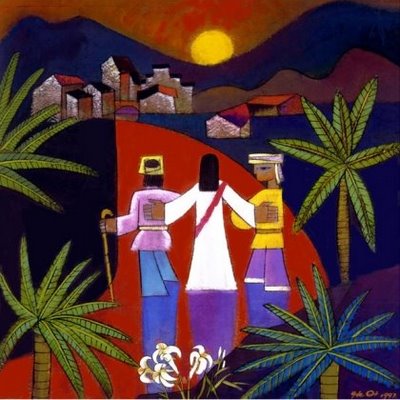
He Qi – The-Road-to-Emmaus

Now that Easter has passed and school holidays are coming to an end, many of us are thinking about getting back to life as usual with all its daily challenges. It was similar for the first followers of Jesus – but with one major difference. They were dealing with disappointment and despair, as all their hopes of a new movement centred around Jesus had been dashed.

This is the situation facing two dejected disciples as they head back home after the devastating events of Good Friday. Jesus joins them on the road and they get into conversation but somehow don’t recognise Jesus. They talk about what has happened, explore the Scriptures and later share a meal with their new friend. Suddenly their eyes are opened and they recognise that they have spent the day with Jesus. Their hearts are stirred and they want to share their insight with others.

I wonder if we ever experience something similar? We are going about our business and a stranger joins us and asks how we are doing. We pour out our heart to this person and they then leave and we don’t see them again. Yet in the encounter we have received a precious gift and perhaps encountered the presence of the risen Jesus with us. The heart of this story is that Jesus meets us where we are – on the road, in our homes, in our struggles and in our joys. Jesus meets us in all the messiness of our lives, but also as we open the Scriptures and share a meal with others, especially Communion. Easter is not an event that has occurred once in history but rather it’s an adventure with the risen Jesus that has begun. It’s a path on which we walk, teeming with the promise of surprising new life.

A new day

In our Australian culture, Easter is often celebrated by going away for the weekend and by over indulgence in chocolate Easter eggs. For those among us who remember the day by going to church, we expect there to be plenty of Hallelujahs and plenty of joy as we recall that Jesus rose from the grave to new and everlasting life.

But the very first Easter Sunday, at least according to Mark’s quite short account, was a different sort of day altogether. The male disciples are huddled inside and struggling with a range of emotions including shock, grief and probably shame. Their dreams for the future have all come shattering down. The women appear more stoical and three of them set off for the tomb where Jesus’ body was laid, in order to anoint his body with spices.

At the tomb the large stone blocking the entrance has been rolled away and a figure dressed in white (an angel?) tells them that Jesus has been raised and is going ahead of them to Galilee where they will see him. The women’s emotions are intense and mostly negative ranging from great alarm and fear to utter astonishment and confusion. They flee from the tomb and talk to no-one. And that is the end of Mark’s Gospel. No hallelujahs. No joy. No sign of the risen Jesus. No celebration.

The account suggests that Jesus’ resurrection was completely unexpected, despite his having told them several times that he would rise again. The resurrection was mind boggling and amazing and terrifying all at the same time. The disciples would take a little time to adjust to the news, but this unexpected day turned their world upside down. Life had triumphed over death, light over darkness and love over hate.

We tend to be a little blasé about the message of Easter, perhaps because we knew all along how the story would end. So our challenge is to sit with the story and try to recapture some of its raw emotion and power to change our view of life and our place in the world. It’s a whole new day, if we just have eyes of faith to see it.

The passion and death of Jesus

Good Friday is often considered to be the most holy day in the Christian calendar as we gather to hear once more the story of Jesus’ rejection, betrayal, suffering and death. At a human level it is a most distressing story of corruption and callous cruelty. At a spiritual level it is also a disturbing story as Jesus cries out from the cross ‘My God, my God, why have you forsaken me?’.

Three brief thoughts as we contemplate the events of Good Friday:

First is its inevitability. Jesus has been purposefully heading to Jerusalem for this final showdown with the Jewish authorities. During his final week in Jerusalem, Jesus directly confronts the temple authorities for their corruption and unfaithful leadership. Simmering animosity reaches boiling point and their actions are predictable. Jesus has known for a long time what his likely end will be.

Second is Jesus’ innocence. Neither the Jewish Council nor Pilate can find just cause to condemn Jesus. The priests feel threatened and Pilate wants to maintain civil order, but Jesus is clearly portrayed as innocent of any charge deserving death. This line of argument will be important for the emerging Christian community to show that Jesus was far from criminal in his actions.

Third is Jesus’ isolation. He has no friends among the priests and scribes and as soon as the heat comes on, the disciples all flee, leaving Jesus alone. In the garden of Gethsemane, Jesus’ anguished prayer that he might be spared from this hour of suffering receives no response from God. In his humanity and in his relationship with God, Jesus feels completely cut off and alone, hence his cry of abandonment from the cross.

Like the women watching on from a distance, we can only watch the unfolding events and wonder why Jesus’ life and ministry must end this way. Yes it seems inevitable, but couldn’t God intervene? Yes, Jesus is innocent so why does justice not prevail? Yes, Jesus is isolated but must those with power always prevail? There is profound mystery here, as our questions remain unanswered. As Jesus experiences the worst that humanity can inflict, where is God?

The answer to that deep question must wait until Easter Sunday to be answered.

Jesus in Jerusalem

Palm Sunday is here, the day we remember and celebrate Jesus’ arrival in Jerusalem and the entry point into Holy Week that culminates on Easter Sunday. Mark tells us that many people spread their cloaks and branches on the ground and welcomed Jesus with great enthusiasm. What Mark doesn’t tell us is the response of the religious authorities, the other opponents of Jesus or the general population of Jerusalem.

The following episodes tell us plenty, though, as Jesus confronts the temple authorities through both word and action, while various groups try to trap him by asking controversial questions. Through it all, Jesus appears to be firmly in control and well aware of what is happening around him.

I wonder what this day means for you. Is it a day to mark what is often labelled Jesus’ triumphant entry to Jerusalem? Is it a day to attend a justice rally, inspired by Jesus’ confrontation of unjust practices at the temple? Or is it a day to ponder who Jesus is and what he might be calling you to do?

On the road with Jesus

I wonder what topics of conversation fill up your time when you go on a road trip with your spouse or with friends. Do you pass the time talking about the latest news on Facebook or delve into deeper topics? In our Gospel reading this week from Mark, Jesus and the disciples are on an eventful road trip that will end up in Jerusalem on Palm Sunday.

We know that Jesus was thinking about the betrayal and rejection and death that awaited him there, because he keeps reminding the disciples of this probable turn of events, although they don’t seem capable of hearing this message. Meanwhile, what are they talking about on the road? Who will be remembered as the greatest among them and who will get the positions of power alongside King Jesus in the coming kingdom of God.

Jesus offers them some hard truths. To be truly great, a person needs to learn about serving others. Jesus then shares that his life and his role as Messiah are all about serving, and even giving his life as a ransom payment to free others. While the world encourages us towards selfishness and looking after ourselves first, Jesus asks us to go in the opposite direction and serve others first. Are you ready to adopt this upside down approach to greatness? Or if you already live in this way, what gentle wisdom do you have to share with others?

Following a suffering messiah

The first half of Mark’s Gospel is built around answering the question of ‘Who is Jesus?’. So we are introduced to Jesus the teacher, Jesus the healer, Jesus the one who has power over unclean spirits and even storms, Jesus who feeds large crowds. These various portraits come to a head when Jesus asks the disciples straight out who they think he is. While popular opinion views Jesus as a prophet, Peter correctly identifies Jesus as the Messiah or King (or Christ in Greek).

The words have barely left Peter’s lips when Jesus begins to speak about the suffering, rejection and death that awaits him. None of this was expected for Israel’s Messiah who was usually seen as a powerful conquering hero. Jesus then makes a bad situation worse by stating that anyone who wishes to follow him must be prepared to walk a similar path of suffering. This call to costly discipleship doesn’t sit well with our generation. The advertising industry makes its money by persuading us that what we really need is greater comfort and more fun, which will be ours if we just buy a particular product or service. So it remains as radical – and uncomfortable – today as it was in Jesus’ day to own the fact that we follow a suffering messiah who calls us to a costly following.

Ministry along with Jesus

There are many ways that we can train people to take on new tasks or fill a responsibility. We might take the approach of a parent, a classroom teacher, an online educator or a coach. The way that Jesus trained his disciples seems closest to what we might term a traditional apprenticeship model. The disciples first spent a lot of time with Jesus observing both his teaching and his actions, and then Jesus sent them out in pairs to extend his ministry in new places (Mark 6:7-13). They are tasked with proclaiming a message of repentance, healing the sick and casting out unclean spirits – the same ministries that have occupied Jesus.

The key instructions they are given are to go out together in pairs, to travel light and to rely on the hospitality of others. The team ministry approach makes sense to us as we can share the gifts we have and benefit from the encouragement and support of at least one other person. Jesus’ instruction to travel light – no money, no spare clothing, no food – sits less easily with us. Rather than being independent, it means reliance on others and also reliant on God. The third aspect is going out to people where they are and relying on them for hospitality. This is often the opposite to our approach of inviting people to share our space with our rules.

It seems that the disciples were quite successful in extending and replicating Jesus’ ministry. They had learned well from Jesus. How would we fare in following Jesus’ instructions for mission and ministry? Are we prepared to travel light, go to where the needs are and then rely on the hospitality of others? If not, what might have to change or what might we need to let go of?

Jesus and the kingdom of God

Jesus was known as a teacher and healer. Surprisingly, his favourite teaching topic (based on the evidence of the Gospel accounts we have) was not love and was certainly not the value or purpose of his death. Rather Jesus’ favoured topic was the kingdom of God. This was the ‘good news’ message that Jesus both announced and demonstrated in his actions.

But what did Jesus mean by the ‘kingdom of God’ and why don’t we spend more of our time thinking about what was central for Jesus? The kingdom of God was based on the idea that God is ultimately in charge and God reigns (or carries out the role of a ruler) wherever people acknowledge God’s goodness, power, inclusiveness and love and seek to live by God’s ways. For Jesus this meant freeing people from sickness or other oppressions, restoring them to community and bringing people life in all its fullness.

In our day, as in the time of Jesus, we have a daily choice in how we will live and how we will relate to others, whether to bring life and hope and wholeness or whether to live in a way where fear or selfishness rules our lives. When we focus too narrowly on the needs and activities of our own church community, we run the risk of missing Jesus’ bigger call to build the kingdom of God.