Acting wisely?

In a few weeks’ time, the nations of the world will gather in Glasgow in Scotland for the CoP26 UN sponsored climate change conference. (CoP is Conference of the Parties, when the 197 nations of the UN gather to discuss climate change. This year’s meeting is the 26th such meeting since 1995). This conference is considered the most significant since Paris in 2015 and will set the direction and framework for climate action for the next ten years or so. Climate scientists have indicated in the latest Intergovernmental Panel on Climate Change report that this period is crucial if we have any chance of limiting global warming to under 2OC.

Australia is considered a laggard on climate change, along with Saudi Arabia, Iran and Brazil. This is because we have no commitment to reach net zero carbon emissions by 2050 and steadfastly boast that we are doing our fair share by a 26-28% reduction in emissions by 2030 compared to 2005. Note that most of this reduction – if achieved – will come from changes in land clearing (i.e. cutting down less forest than planned). Our reduction in actual CO2 emissions is forecast to be less than 5% by 2030. By contrast, most other developed countries propose to reduce their actual carbon emissions by 40-70% by 2030.

Is this a wise course of action for Australia to take? We are already the driest continent on earth (other than Antarctica), already suffer from major bushfires and flood damage from cyclones, and already experience extended and crippling droughts – all of which are expected to worsen considerably as the global climate continues to warm. So we are committing ourselves – as well as the rest of the world – to a dangerously warm future. The excuses trotted out by our Federal government are that they will not commit Australia to an open-ended program that could cost billions and cost jobs in coal mining. A detailed roadmap is needed to allow for accurate forecasts of likely costs. Yet this same government has just signed us up to a completely open-ended program to build nuclear powered submarines with no costing (except that it will be well north of $100 billion) and no timeframe and only a vague promise on jobs.

The book of James contrasts two types of wisdom – earthly and godly. Earthly wisdom is characterised by selfish ambition, boasting and lies, while godly wisdom is characterised by gentleness, peace and mercy. Here peace refers to the Hebrew concept of shalom, where every person and every part of creation knows their place and enjoys the blessing of living a healthy and fruitful life. It seems that Australia is choosing the way of earthly wisdom – recklessly ignoring the warnings of climate scientists and foolishly locking in a destructive future for our planet. Pray for a late change of heart and the setting of a realistic but ambitious target to reduce our emissions.

Wisdom from planet earth

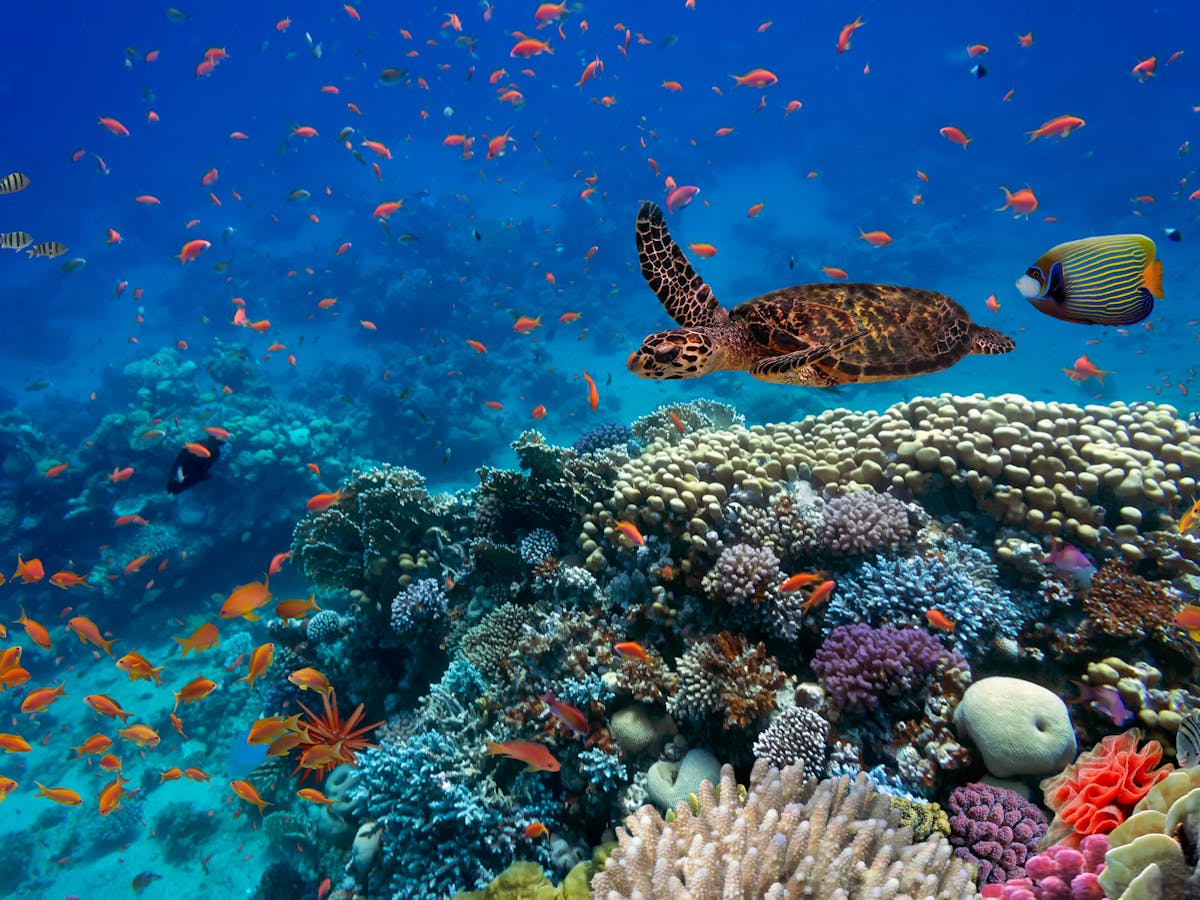
The Season of Creation focus this week is on ecology (oikologia, literally study of the house). As a scientific discipline, ecology explores the relationships and connections between living organisms – including humans – and their physical environment. Humanity of course has significantly altered the environment of many creatures through agriculture, forestry, commercial scale fishing and creeping urbanisation. Many species are under threat as their habitat shrinks or is destroyed. Other species are struggling to adapt to climate change (e.g. the coral reefs of the world as the ocean warms).

English poet and Dean of St Pauls cathedral, John Donne, famously wrote that ‘no man is an island, entire of itself’. He was speaking of the deep connections between all of humanity, so that the suffering or death of even a single person affects the whole. Likewise there are deep and sometimes mysterious connections and inter-dependence between all living creatures. As part of the created order, and especially given our call to care for creation, humanity is integrally connected with the health and well-being of all creation.

If we are to turn around the widespread threats facing the planet, we need wisdom as well as the will to act. The book of Proverbs suggests that God is ultimately the source of true wisdom, but there is much to be gained from close observation of how various creatures live and co-operate. There is also much wisdom to be gained from listening to indigenous people who have cared for creation for millennia. They would tell us to listen to creation itself and to respect our plant and animal neighbours with whom we share the earth. Covid has given us the time and space to slow down and explore the environment close to where we live. What are we seeing? What are we hearing? What wisdom are we discerning?

What’s unusual about God’s ‘economy’?

The economy is what most politicians and business leaders seem to focus their attention on, even and especially during these Covid times. While daily press conferences may focus on case numbers and hospitalisation rates, the push to get people vaccinated and ‘the economy’ opened up again form the back story. It’s clear from the Prime Minister’s language that he wants the States to stop lockdowns as soon as possible … because he wants the economy to be buzzing along when he calls the Federal election early next year.

It may surprise you to know that the New Testament speaks several times about God’s economy (oikonomia) and about being good managers (oikonomos) or economists of God’s resources. These Greek terms refer to managing various aspects of a household, including its finances. But when these terms are linked to God’s provision and God’s values, it becomes clear that God’s economy operates quite differently to the commercial economy that we are used to.

God’s economy is built on grace and generosity, where all have enough and all are treated equally whether or not they ‘work’ equal hours (as in the parable of the vineyard workers). God’s economy encourages us to build up treasure in heaven – rather than in our bank accounts – by loving our neighbour. In this Season of Creation it is helpful to think about our neighbours broadly – and to include our plant neighbours, animal neighbours and bird neighbours (as indigenous Christian leaders encourage us to do). God’s economy is also heavily focused on the poor and encourages positive discrimination for the poor, confirming that the economy of God’s kingdom is remarkably counter cultural. There are not winners and losers in God’s economy, nor rich and poor, and caring for creation is not an afterthought. Instead, there is a just home for all of God’s creatures, both human and non-human.

Welcome to the season of creation

This is the time of year when Christians are invited to celebrate the season of creation. It seems appropriate to be doing this at the start of spring when flowers are blooming and all of creation seems somehow more alive. For the Wurundjeri people of Melbourne this was season is called Poorneet, the tadpole season, the season of plentiful food from lilies, orchids and yam daisies.

It also seems appropriate to be remembering the groanings of creation in the lead-up to the COP26 climate conference in Glasgow which starts at the end of October. While much media attention remains focused on the Covid pandemic, the threat of climate change poses a larger threat to the whole of creation as habitats warm and become inhospitable to many species. While fossil fuel companies direct our attention to the small changes we can make to our own individual lives (which collectively are helpful), we will not reach sustainable levels of emissions without major changes at a government level.

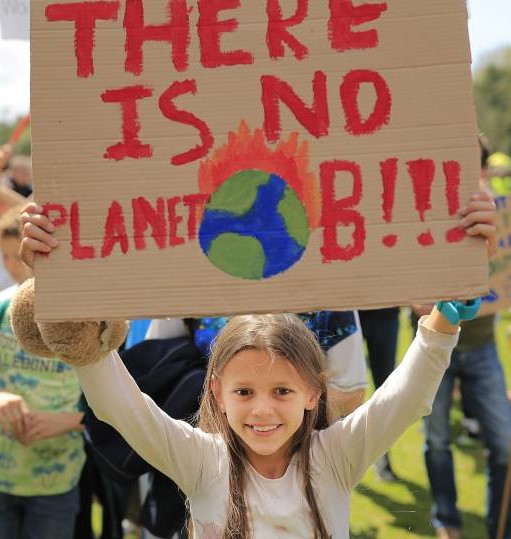
The creation stories recorded in the book of Genesis set the scene for the unfolding story of God, creation and humanity. In these stories, humanity is given a vocation to care for and tend creation as God’s representative. If we take our cue from God’s gracious providence, as described in Psalm 104, the call is not to dominate over or to destroy creation but rather to care for it in such a way that each part of creation can thrive. There is much we can learn from our indigenous brothers and sisters in this respect. But we must also recognise that use of fossil fuels (e.g. coal, oil, gas) must drastically reduce – and soon – to give creation a fighting chance. As some of the posters at the School Strike for Climate rallies point out, there is no Planet B.

Australia’s hardening attitude towards refugees

This week we have seen Australia scrambling to evacuate our citizens from Kabul in Afghanistan along with interpreters and security staff who helped Australians during the last 20 years. It’s clearly been a difficult and dangerous task to undertake in the current circumstances but our government’s tardiness and flip-flops on visas haven’t helped. Our offer to take in 3,000 refugees from Afghanistan sounds reasonable at first blush, but not when compared to historical precedents.

After World War 2, Australia accepted some 100,000 refugees/migrants from Europe every year for 15 years. After the Vietnam War ended, we took 8,000 refugees per year for 10 or more years. We accepted 40,000 refugees from Kosovo and 12,000 from Syria. There is a trend here. Australia has steadily become less compassionate and less generous. Our language reflects our hardening actions. Asylum seekers are now ‘illegals’ and our Immigration Department has become Australian Border Force. We claim to be the land of the fair go but we have closed our hearts to the needs of the vulnerable seeking hope and a new life in our midst. I have witnessed first-hand the effects of our cruel policy of indefinite detention of asylum seekers. Yet Scripture is unambiguous. We are called to love the foreigner in our midst, because God’s people have known what it’s like to be foreigners and to be oppressed. Jesus calls us to feed the hungry and to welcome the stranger. Sadly, these Scriptures are ignored by our Christian Prime Minister who himself oversaw the ring of steel placed around Australia in 2014, supposedly to protect our borders (who remembers Operation Sovereign Borders?). Please pray that our political leaders would become more compassionate and that the Australians who vote for them might also be more empathetic and kind to the plight of refugees.

Enduring the battle with evil

This last week has been pretty grim on the news front. The spread of Covid seems to be getting away from us in Australia, especially in NSW but also in Victoria and ACT. Lockdowns are being extended and made more restrictive. The collapse of the Afghan government and the mad scramble to evacuate people from that country are deeply troubling on many levels. Good news seems to be rather thin on the ground at the moment.

The closing remarks of Paul’s letter to the Ephesian church are a reminder that we live in an often dark world and we are engaged in a battle against evil whether we like it or not (which is not to say that Covid in itself is evil, although some of the actions of the Taliban in Afghanistan appear to be evil). Paul is not trying to alarm the church, but rather is being fairly practical. He writes that there are evil forces at work that will try to tempt, deceive or manipulate us in ways that will undermine or threaten our faith. So we must resist these forces and stand firm. This call is consistent with the line in the Lord’s Prayer ‘Save us from the time of trial and deliver us from evil’.

The way to stand firm is to arm ourselves – inwardly – with the character of God – with truth, righteousness, peace, faith and the hope of salvation. We’re also to immerse ourselves in God’s word – the Scriptures – and to pray as we are led by God’s Spirit. If we follow these suggestions it does not mean that evil will cease to buffet our lives … but we will have our focus where it needs to be – on God and what God is able to do in us and through us. Then we can be strong and able to withstand what comes in our direction.

Living wisely

As we endure our sixth Covid lockdown in 18 months, many of us are feeling somewhat fatigued and frustrated. Why does it keep happening? When will life ever return to ‘normal’? In Paul’s letter to the Ephesians he calls on followers of Jesus to make the most of every opportunity and to live wisely. But what does this look like in practice?

We’ve had a couple of glaring examples this week of the opposite – how to live unwisely. The first came from Liberal MP George Christensen who gave an impassioned plea for Covid lockdowns and other health measures to be abandoned, labelling them as ‘madness’. While it’s true that lockdowns are costly and curtail our freedoms, the evidence from Australia and elsewhere in the world is that the alternative – just letting the virus rip – is far, far worse both in terms of lives lost and the economic impact. Luckily for our country, State Government leaders have wisely avoided the path suggested by Christensen.

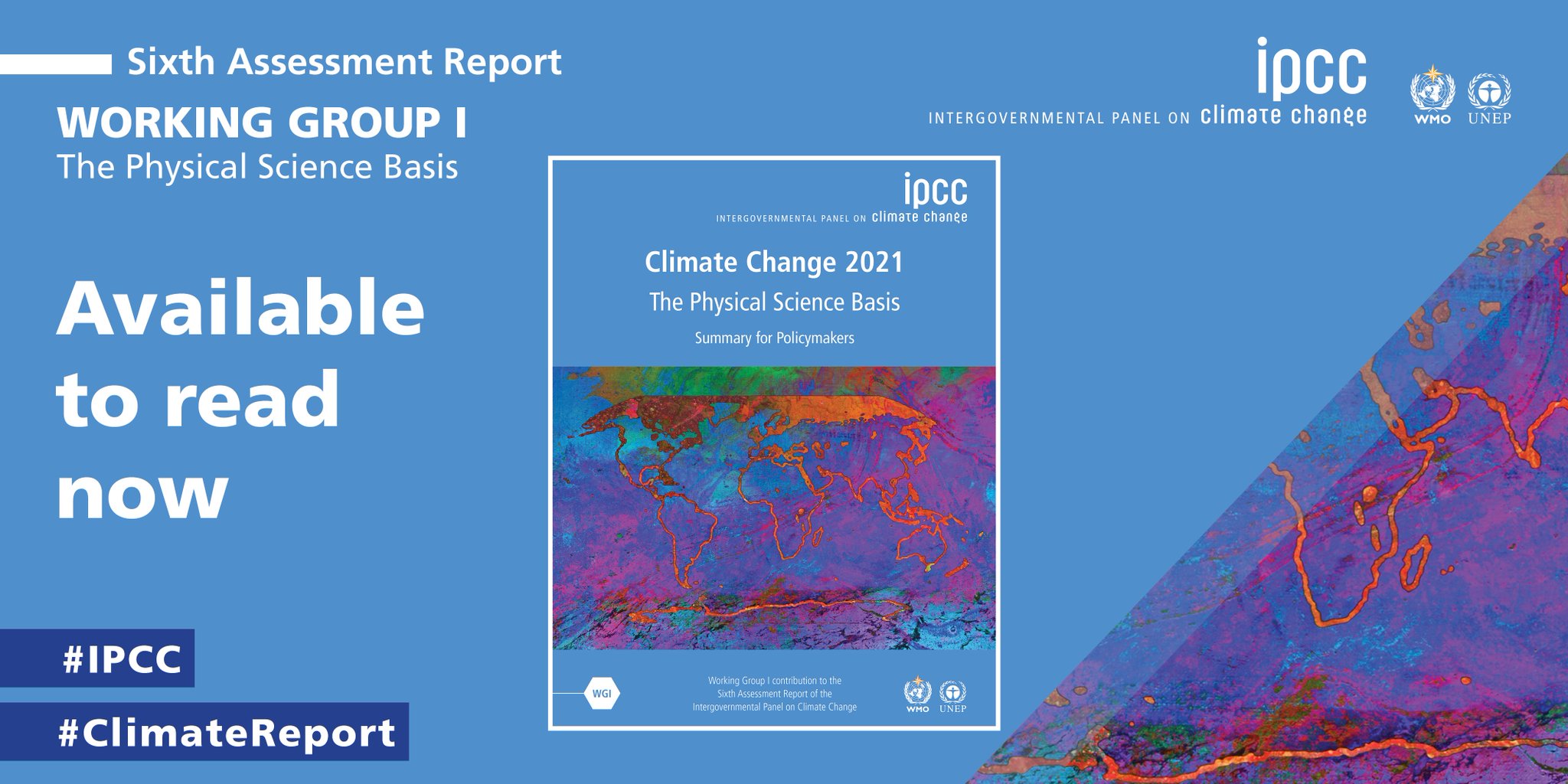
The second example has been the Government’s quick response to the newly released IPCC (Intergovernmental Panel on Climate Change) report. This report paints a fairly gloomy outlook for the global climate with temperatures predicted to rise by at least 2 degC over pre-industrial temperatures, locking the world into more intense bushfire events, cyclones, flooding and the like. The time to act to prevent the worst effects is right now with reductions in carbon emissions of around 50% needed by 2030. Our government’s predictable response is to maintain its hope that future technology can solve the problem while refusing to do anything substantial to reduce emissions in the short or medium term. While governments have generally been praised for following the advice of scientists in how to handle the Covid pandemic, they casually ignore the advice of climate scientists. This seems a very unwise path to follow. How about Paul’s advice on how to live wisely? At first glance it seems simplistic and to those outside the church probably ridiculous. The advice – focus on worshipping God and living holy lives, whether in the church, in the home or in the workplace. Paul puts his finger on some important truths. If we want to live wisely we need to tune into God’s wisdom and God’s ways. These include putting people first, rather than profits, as Christensen would suggest. It also suggests that listening to scientists who have spent a lifetime observing the physical world – whether in the area of human health or the area of climate – would also be wise.

More lessons from the Olympic Games

The focus of the Olympic Games has shifted from the pool to athletics this week. There have also been finals in team sports and new events like BMX and skateboarding. There have been many highlights … medals for competitors as young as 13 (in the skateboarding) and as old as 62 (Andrew Hoy in equestrian) … Australian track athletes making it to their respective final … teams playing ever so well yet not quite winning.

One particular highlight came in the final of the men’s high jump competition where the two leading competitors, Mutaz Barshim from Qatar and Gianmarco Tamberi from Italy, both cleared 2.37 metres (or 7 ft 9 inches in imperial measurements). Both failed to clear the next height of 2.39 metres. They were offered a jump-off to determine the winner. Instead they asked if they could share the gold medal. Barshim said “I know for a fact that for the performance I did, I deserve that gold medal. He did the same thing, so I know he deserved that gold.” Tamberi said “Sharing this moment with a friend is even more beautiful … It was just magical.” Two competitors, two friends, sharing the joy and sharing the spoils.

In Paul’s letter to the Ephesians, he encourages the community to speak the truth and to speak only words that are full of grace and useful for building up. The example of the two high jumpers and their words of grace for one another show how this can work in practice. Imagine how much more could be achieved in the political sphere if our politicians actually spoke the truth and stopped trying to score points off each other, and worked to build up rather than tear down. Paul’s advice is really so simple yet could make such a difference in our families, our churches and in the wider community.

Due to lockdown, worship this week will once again be on Zoom. Please contact the church office for the link.

Lessons from the Olympic Games

The Olympic Games have helped lift our spirits this week and provided a welcome distraction from the grim news elsewhere, especially the ongoing and worsening Covid situation in NSW. On one hand, it’s easy to be cynical about the parochial coverage of the Olympics and the emphasis on winning gold medals. On the other hand, I’ve noticed more attention on two other aspects this week.

First is the emphasis on teamwork, even for individual sports. All the athletes are part of a wider group of people helping prepare and sustain them. There are coaches, fitness trainers, physios, psychologists, teammates, family and friends all working behind the scenes. So while we focus our attention on the athlete in the spotlight, it’s actually much more about teamwork.

Second is a recognition about the importance of maturity. The mental side of sport has long been recognised, but we’ve seen athletes stay focused and calm in the heated moments, handle disappointment, setbacks and losing with grace, champions withdraw from their event due to mental stress, and others show great flexibility and adaptability. These are all signs of maturity for athletes who in the past have been raised with the motto that winning is everything.

The apostle Paul calls us to show similar attributes in our walk of faith. The goal, he writes, is for us to grow up and come to maturity, attaining to the full stature of Christ. But this goal is for the whole community to achieve, not for just a few individuals. So it involves teamwork and utilising every person’s gifts, working together for the common goal. Perhaps the athletes we see at the Olympics can inspire us to dream and achieve our goal.