An upside down adventure

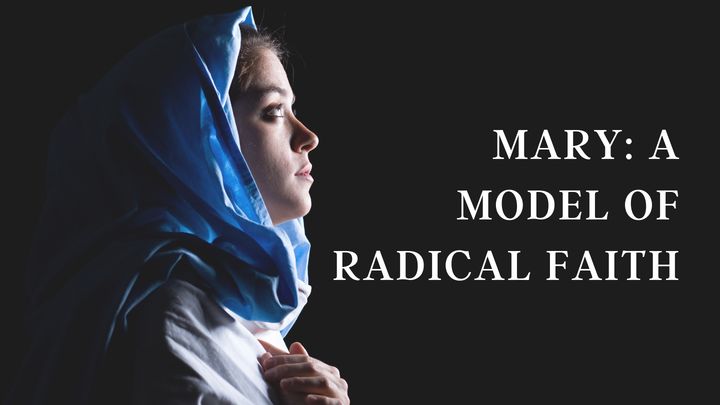
Many Protestant Christians have a rather ambivalent view of Mary. Yes she is the mother of Jesus and features prominently in the Christmas story, but she then rapidly disappears from our view, only to reappear at the foot of the cross (in John’s Gospel at least). But Protestants are wary of the high view of Mary in the Catholic Church and her exalted role in redemption and prayer. Because of this ambivalence, and the influence of Christian art that usually depicts Mary as meek and demure with her eyes cast downwards, we lose sight of Mary’s contribution to our faith.

Mary’s song in Luke 1:46-55 that we know as the Magnificat is actually quite subversive and radical. Mary considers herself blessed and favoured by God, who has done great things for her. God’s choosing of Mary to be the mother of Jesus is indeed an honour, but it comes at considerable personal cost to her reputation and later life. The stigma surrounding the origins of Jesus will never leave her and she will most likely live much of her life on the margins of polite society. So a rather upside down blessing.

The balance of the song is equally subversive as Mary sings of the proud, powerful and rich being brought low while the poor and hungry are lifted up. In many ways this is a foretaste of the message and ministry of Jesus who comes to bring good news to the poor through word and action. Mary’s prophetic words are filled with faith, courage and vision and set out the first declaration of God’s upside down kingdom adventure in Luke’s Gospel. So yes, Mary fulfils an important role in being the mother – and educator – of Jesus but is also an inspiring example of an early female disciple who has an important voice for us to hear.

An adventure centuries in the making

At Christmas time there often seems to be an emphasis that everything has to be new – new gifts and new toys for the children or grandchildren, new table settings, new clothes. It’s all an advertiser’s dream as people flock to our shopping centres to buy ‘stuff’ for Christmas. No wonder that many retailers make more profit in the three weeks before Christmas than for the rest of the year combined. Of course we also retain older traditions – perhaps cooking a favourite recipe handed down over a couple of generations, watching Carols by Candlelight, decorating a tree with our treasured ornaments. So Christmas is a mix of old and new.

The Christmas story itself as we read in Luke’s Gospel is now considered old, but at the time God was doing a new thing among the people. The birth of John (later called the Baptist) was part of this new adventure. When Zechariah rejoices at the birth of his son, John, his words look both backwards and forwards. They recall God’s promises of old – promises made to Abraham to bless his descendants – and promises fulfilled at the Exodus as God acts with might to save the people from their enemies. Zechariah’s words also look forward to the ministry of John who will encourage people to repent and turn back to God afresh.

As we prepare to celebrate Christmas once again, I wonder where your attention is drawn. Do you look back with amazement at God’s plans and promises that came to pass in that first Christmas with the births of John and then Jesus and all that flowed from them? Or do you rejoice in what God is doing in our midst today, or look forwards with anticipation to where God’s Spirit is leading us in the future? Wherever your gaze is drawn, may you reflect with joy at how God is weaving your story into God’s bigger story.

An adventure beyond the ordinary

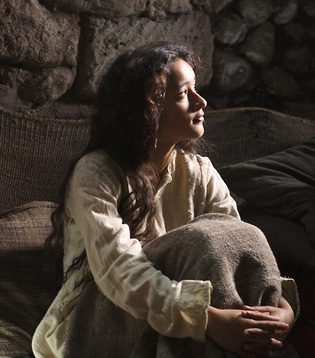
This week, as we move a step closer towards Christmas, we hear the story of Mary receiving some most unexpected news. She is to have a son who will be named Jesus, who will rule on the throne of David and be called the Son of the Most High God. Mary asks how this will be since she isn’t even married. The somewhat mysterious response is that the power of God’s Spirit will come upon her.

We are probably too familiar with this story that we miss how scandalous it is at so many levels. Mary is young and as yet unmarried, so to become pregnant is a social scandal that will lead to innuendo, disgrace and possibly worse. What will she say to her parents and to her fiancé Joseph? Mary is also a nobody in the wider scheme of things. She comes from an ordinary family and from a very ordinary small village. She has no status, no connections.

But therein lies the beauty and mystery of this story – that God chooses to work through ordinary people like Mary living ordinary lives. God may well have seen qualities in Mary to suit her for this rather extraordinary role – a deep faith perhaps, courage and a sense of calm. Perhaps God sees these or other qualities in our lives. The most important characteristic though is that Mary says ‘yes’ to God’s invitation. She doesn’t know where this will lead or about the joys and challenges and griefs it will bring her but she says yes anyway. May we be inspired by Mary’s adventure beyond the ordinary.

An adventure beyond religion

Advent is here, which marks the beginning on a new year in the church Lectionary cycle as we move to the year of Luke. Although there is often good wisdom and discipline in following the Lectionary readings week by week, the selection of Advent readings has always left me a bit puzzled. Even more so in the year of Luke which has its own insightful portrayal of the origin story of Jesus as Luke intertwines the prediction, arrival and celebration of two special babies – John (later to be known as the Baptist) and Jesus (later to be given any number of names and titles).

The story begins with Zechariah, an elderly and faithful priest descended from the line of Aaron. Zechariah serves at the temple in Jerusalem, the heart of Jewish worship. Both he and his wife Elizabeth are described as righteous and blameless – people who are careful to follow the laws and guiding ways of the Jewish torah. But they are both old and in one significant way, their lives remain unfulfilled as they have no children.

But God has a plan to bless Zechariah, which is conveyed to him in an angelic message. Zechariah struggles to comprehend that his wife in her old age should now have a son. This child, to be named John, will also be a blessing to the wider nation of Israel as he will become a powerful prophet a little like Elijah. All this will take Zechariah, Elizabeth and John well beyond their comfort zone, well beyond the safe sanctuary of the temple and its organised religion. It will be an adventure – that will bring blessing and pain, joy and sorrow. As we emerge from two long years of Covid disruption, I wonder whether we are ready to embark on a fresh adventure with God?

Living with integrity

Integrity and trust are essential for any relationship whether friendship, marriage or in public life. Both seem to be under a cloud at the moment among our political leaders, whether Prime Minister Scott Morrison or Premiers Daniel Andrews and Gladys Berejiklian. The word integrity comes from the Latin integer meaning whole or undivided. So in mathematics, an integer is a whole number without any fraction. If a person lives with integrity there is a wholeness – their words and actions match – they do what they say. We might call them authentic or honest. The Bible uses words like straight and upright to describe such people. I wonder if you know people who live like this? Or were influenced by people who lived like this?

In the story of Ruth, Boaz is a person of integrity. When challenged by Ruth to act as next-of-kin for herself and Naomi, Boaz promises that he will act to ‘redeem’ them and will do so that very day. He is as good as his word and gathers the necessary witnesses to fulfil his promise. He buys the land belonging to Elimelech, Naomi’s now dead husband, and takes responsibility of providing for Naomi and Ruth. Boaz also marries Ruth and they have a son Obed, who has a son Jesse, whose youngest son, David, later becomes the most famous king of Israel. Integrity leads to unexpected blessing.

In a culture where so much seems to depend on appearance and spin, the biblical emphasis on integrity is helpful reminder that a person’s character matters just as much if not more than their words or their social media presence. Sometimes we may make promises we later regret or that are costly to fulfil. A person of integrity will either make good on their promise, despite the cost, or will explain openly why they can no longer do so (e.g. how the circumstances have changed). If politicians would act in this way then perhaps they would regain the trust they have lost.

Living with courage and vulnerability

Living with vulnerability is a fact of life for many people in our world. This may be due to illness, disability, age or gender. It may be due to our social situation as a single parent, or a widow, or a refugee or an indigenous person. For people involved in creative pursuits, vulnerability comes with the territory. But for some people, especially males, vulnerability is often seen as weakness. Hence we may be reticent to share what we are really feeling. By following the cultural expectation that we need to appear strong and in control, we avoid making ourselves vulnerable and may as a result end up lonely and disconnected from others.

As widows, Ruth and Naomi are very vulnerable. They are limited in what work they can do and their hence finances are precarious. The Hebrew word for widow literally means one who is silenced or bound. So in many ways they are unseen and unheard. To survive in such a male dominated world they must be both shrewd and courageous. So in the middle chapters of the story we see Ruth doing what she can to scratch a living by gleaning (picking up grain that has been left behind or dropped by the harvesters). Later she and Naomi hatch a plan to persuade Boaz, a close male relative of Naomi, to act on their behalf. This plan is daring and requires great courage to pull off. You can read the details in Ruth chapter 3.

The thing about choosing to make ourselves vulnerable is that it always involves risk. We may be rejected or mocked. We may be misunderstood. We may be regarded as weak. We may suffer pain or violence. But the surprising part is that being vulnerable with each other is essential if we want real or deep connection with one another. It’s also the gateway to creativity and innovation, since any artistic or creative venture requires vulnerability. The question for us is whether we are prepared to take the risk of being vulnerable in order to build connections or to be creative.

Slowing down with Ruth

Often we get caught up in the headline news of the day, which can affect our whole outlook and mood. For months we’ve waited grimly for the daily announcement of Covid infection numbers or the roadmap out of lockdown. This week we may have tuned in the various messages coming from the world’s leaders and activists at the CoP26 climate conference in Glasgow that will affect the planet in important ways. But perhaps the biggest and brightest headline this week was the finding of missing 4 year old Cleo in Western Australia that brought a smile to many faces and hearts.

I’m sure that God is somehow involved in all these headline grabbing stories. But it’s important to remember that God is also involved in our ordinary everyday lives, if we have the eyes of faith to see it. Perhaps in the joy of children playing together, in the quiet catch-ups with friends or even in the routine of working in the garden or going for our daily stroll.

Amidst the headline grabbing OT books that speak of the exploits of towering figures like Moses, Samuel and David, there is the short story about Ruth and her mother-in-law Naomi. It’s unusual in the patriarchal biblical culture to have such a focus on the relationship between two women and their struggles and joys. But it’s refreshing that such a story was deemed important enough to include in our Bibles. It shows that God is concerned and involved with our everyday life and simple tasks like putting food on the table. God has no speaking lines in this story yet is present in nearly every scene. May this story encourage us to slow down and look out for where God is at work in our lives.

Giving thanks for those who have inspired and helped us

Isaac Newton, the famous mathematician and scientist, once wrote that ‘If I have seen further, it is by standing on the shoulders of giants’. It is customary on All Saints Day (1st November) for us to pause, acknowledge and give thanks for those who have walked before us and inspired us in the faith, whether these people are renowned church leaders or little known people who played an important part in our personal faith journey. They are the giants on whose shoulders we stand today.

As Melbourne emerges from our sixth and hopefully final Covid lockdown, it also seems appropriate to pause, acknowledge and give thanks for the thousands of people who have helped us through this pandemic, whether medical researchers, healthcare workers, teachers, delivery truck drivers, supermarket workers or cleaners. The pandemic has highlighted who really are ‘essential’ workers and how the burden of the pandemic has often fallen on their shoulders, often at significant personal cost.

The Bible readings set down for All Saints Day all highlight that new life often comes out of the worst of circumstances. Lazarus succumbed to an unnamed illness and died. Many people, including Jesus, are caught up in the circle of grief and loss. But then surprising and unexpected new life emerges as Jesus calls Lazarus back to life. We have been living through nearly two years of grief and loss caused by Covid. As we emerge from this experience, where have you found unexpected new life? For what are you especially thankful?

Learning from Job

This year has sometimes felt as though we are living through a second pandemic. We thought at this time last year that we were nearly done with Covid, that summer and the arrival of vaccines in the new year would return everything to normal. Then along came Delta and we were thrust once more back into the anxiety and isolation of extended lockdowns that we are only just emerging from. The future still feels uncertain. This second year of the pandemic has been much harder to live through for many as the virus and the lockdowns have taken a significant toll on our physical, mental and spiritual health. Where has God been through this time of suffering and loss?

This question lies at the heart of the book of Job. Where is God in the midst of suffering? Although this book is often bleak, the last few chapters suggest that God is with us in our darkest despair and in our pain – even though, like Job, we may not always be aware of God’s presence. God does eventually break the silence and speak to Job, restores him to health and blesses him.

Our lives may not always come to such a happy ending as the book of Job, but along with Job we can be comforted when we recognise God’s power, justice and love at work in the world and in our lives. God never explains the cause of Job’s suffering, however, which remains a mystery. So too we may never know the cause of suffering in our lives but we can take solace from Job’s experience that God does hear our cries, does care and does want to have relationship with us.

Sitting with Job

The book of Job is not an easy or feel-good read. The subject matter is fairly heavy – about loss, grieving, suffering and God’s justice. But it’s also about the value of community, about faith and about wisdom. It may actually be a good book for our current times as we struggle with some of these same issues in the midst of our extended and worsening Covid lockdown.

While we may at times ponder the themes of suffering, and loss and the presence/absence of God in a general or abstract way, we experience suffering and loss in specific and personal ways – the loss of a loved one, the loss of a job or a dream, the mental suffering caused by lockdowns or the physical suffering caused by sickness. Each person’s experience of suffering is unique. Just as it is for Job.

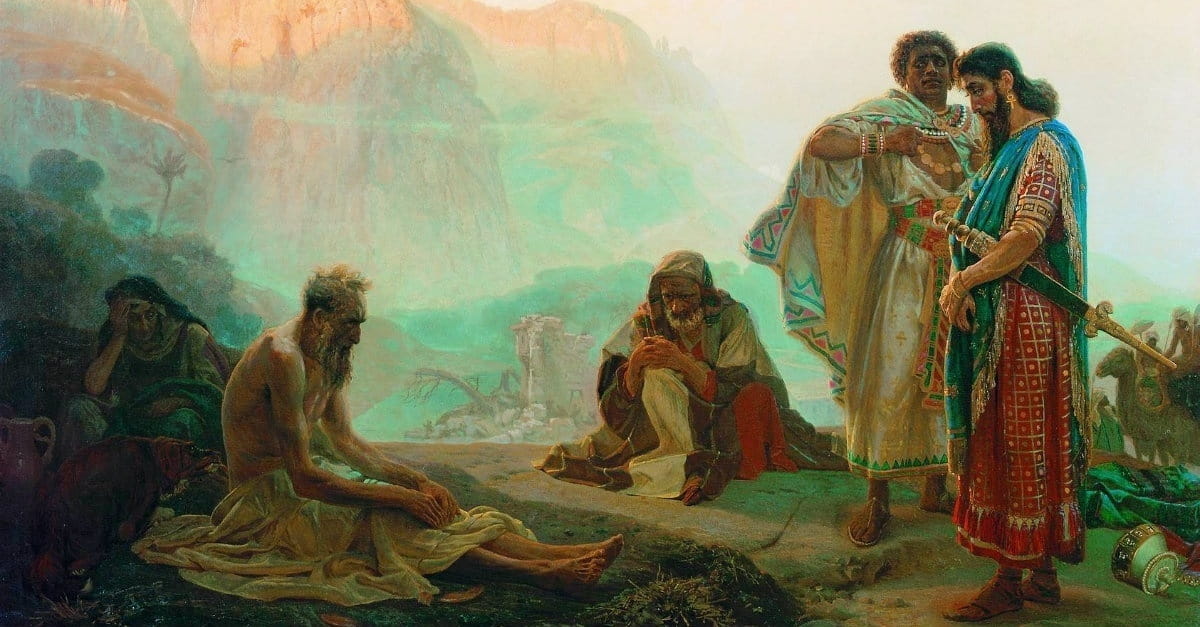
As Job suffers loss after loss, he maintains his faith in God, who is seen to bring blessing but who may also allow trouble to afflict us. As Job struggles on with a painful disease, three friends come to see him. They too are affected and distressed by Job’s suffering and sit with him, silently, for several days. We might learn from this initial approach taken by the three friends that our presence at such a time is probably more important than any words we may speak. Our presence, our empathy and perhaps gentle touch are appropriate responses – rather than our judgments or solutions to the person’s problems. May we carry this wisdom with us when we encounter people who are suffering.