Surprised by joy

In our culture, many people seek happiness. Advertisers con us into believing that the secret to happiness is to buy this product or holiday at that destination. Then our life will be happy, our family members will all get on marvellously with each other and life will be full of laughter. We know that advertising works, so many people buy into this shallow understanding of happiness.

The reality, though, learned through experience, is that true and lasting happiness can’t be bought so easily. Even if we do buy the advertised product, our family members won’t necessarily get on and there will still be stresses and anxieties aplenty, especially at this time of year. Happiness is fickle. It depends on how we are feeling on any day, how well we slept last night, what particular circumstances we are facing today and even our brain chemistry.

But joy is different to happiness. Joy is an emotion that comes from a different place to happiness. We can feel joy even if our circumstances are bleak. It’s an emotion that says we’re in the right place and doing the right thing. It often comes from God’s Spirit, which was the case for Mary, the mother of Jesus. Outwardly, her circumstances are not good … she is expecting a child but her husband-to-be, Joseph, is not the father. This will most likely cause her to become a social outcast and the subject of gossip.

Yet God’s promises to her about who this child will become and how God will transform the world through him fill her heart with joy as she sings the song we know as the Magnificat. God is acting to bring change and life and hope and Mary has a significant part to play. So she is filled with joy and sings her subversive song.

May we too find ourselves surprised by joy at what God is doing in our lives and in the world.

Praying for peace

One of the Advent candles that we light each year represents peace, usually lit on the second Sunday of Advent. The radical vision outlined in Isaiah chapter 2 looks forward to a day when people and nations will learn God’s way of peace and will take their weapons of war (swords and spears) and make them into implements for farming (ploughs and pruning shears). All people are encouraged to walk in the light of God’s ways. During Advent, we are also reminded that Jesus came as the Prince of Peace (one of the titles used to describe the Messiah in Isaiah 9:6) and that at his birth, the angels announced glory to God in heaven and peace on earth among those whom God favours (Luke 2:14).

But when we look at the world at the end of 2022, there are many places and many situations that lack peace. One of the most disturbing of these situations is the ongoing war in Ukraine that has displaced millions of people, killed thousands and made life miserable and dangerous for many. Yet equally disturbing is the famine in east Africa where millions of people face starvation and extreme hunger as winter rains fail again, made worse by the effects of climate change.

Closer to home, we are shocked by the latest Closing the Gap reports that highlight the desperation experience by many indigenous communities as children are (still!) being removed from families in large numbers and young people are locked up in prison. The hope of having an indigenous voice to Parliament enshrined in the Constitution is also under attack as a major political party (the Nationals) this week decided to oppose the proposed referendum.

In these and other situations it’s hard to see how peace can come, who will make it happen and how it can be sustained. It has always been thus through human history. Yet Advent also teaches us that nothing is impossible with God. Our role is to bring peace wherever we can but also to keep praying for peace and seeking God’s mercy and grace.

The season of Advent – a season of hope

The world often seems somewhat bleak and dismal, especially this year with grey skies and floods, a cruel and destructive war in Ukraine, lingering covid in the community and the cost of living going up and up. But I’m reminded of the Monty Python song that includes the line … if life seems jolly rotten, there’s something you’ve forgotten and that’s the time to laugh and dance and sing.  

Advent is the time of year leading up to Christmas where we are invited to pause and listen again to the promises of God to bring light in the midst of darkness, to bring hope and joy and love and peace. It’s much easier of course to focus on the issues and problems that are right in front of us, but Advent encourages to lift up our gaze and to hear afresh the plans that God has for the world.

For the Jewish people, always living under the threat of more powerful neighbours (a bit like Ukraine), it was fairly natural to look back to the golden age of their history under King David. He was the one who defeated all their neighbours, who established Jerusalem as his capital and who united all the tribes. So when things looked bleak, Israel hoped for God to raise up another King David, another Anointed One (literally another Messiah). This hope took several forms. Sometimes, as in the Isaiah 11 reading, the messianic figure is warlike and will strike his enemies with the rod of his mouth. In other readings, as in the one from Micah, the Messiah is a gentler figure who will shepherd the people and bring peace.

When we look at the world, what do we hope for? We might, for instance, hope for peace and equality and justice. But how will these outcomes come about? Which leader or leaders will bring them to reality? The message of Advent is that God has already shown us the way through the life and teaching and death of the one born as a vulnerable baby in Bethlehem.

Frontier Services – comfort and generosity

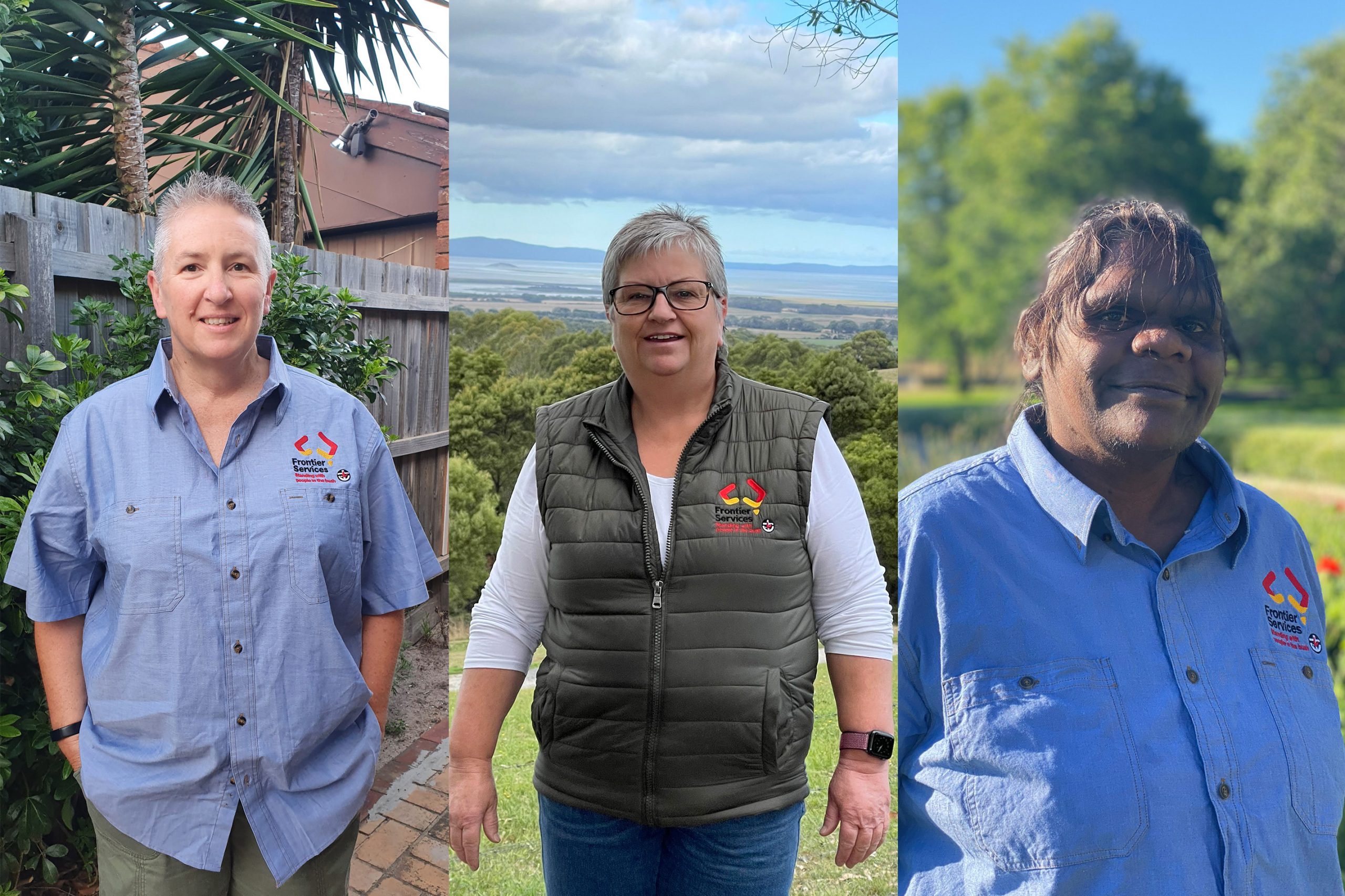
The ministry of Frontier Services goes back to the vision of Rev John Flynn to create a ‘mantle of safety’ for those living in the bush. The work of Flynn is remembered on our Australian $20 note. 110 years on, bush chaplains and Outback Links volunteers are continuing to help and support people living in rural and remote parts of Australia. As the image shows, things have changed from the early days of Flynn. Women bush chaplains as well as husband and wife teams are now a part of the mix, which was once predominantly male. Frontier Services reach now includes indigenous and mining communities as well as isolated farms and stations.

Life in the bush has always been challenging. The last few years have been particularly so with droughts, mice plagues, covid and this year devastating floods through much of eastern Australia. This requires physical, emotional and spiritual resilience to cope. As the reading from Isaiah suggests, God wants to bring comfort to people and make a way through the wilderness. Usually this comfort and compassion comes through human agents, such as the chaplains and volunteers of Frontier Services.

But to bring this comfort to those in the bush needs resources – not just people but also vehicles and fuel. So Frontier Services relies on the generosity of people living in the relative comfort of the city to support those doing it tough in the bush. In the reading from 2 Corinthians, Paul describes such generosity as a grace, a gift of God’s Spirit.

That is why the folk of Croydon and Croydon North congregations are holding a Great Outback BBQ this Sunday to raise some of the resources needed by Frontier Services. So please join us at 11.30 am for the BBQ or jump on line to make a donation towards the inspiring ministry of Frontier Services.

Would you like the good news or the bad news?

When there is a mixture of news to be shared, we’re sometimes asked whether we want the good news or the bad news. In our culture, the bad news is easy to find. Just turn on the nightly television news, open a newspaper, log in to Facebook or go to whatever source you normally get your news from. You’ll quickly find plenty of bad news – from wars and disasters to political scandals and scuttlebutt, from looming health crises to the climate emergency.

Good news is a little harder to find, but it’s there if we have eyes to see it and ears to listen. There is much love and joy and care in the world – within families, between friends, in the local neighbourhood. Natural disasters like the recent floods often bring out the best in people – helping out their neighbours in need.  It’s also good to remember that the sun will come up tomorrow morning however dismal things may seem right now.

This week we are offered two visions of the world from the ancient past – one from the prophet Isaiah and one from Jesus in the Gospel of Luke. Both are relevant and both are formative for Christian faith. But they are nearly opposites of each other so we have to work hard to hold them together in tension.

First, the bad news from Jesus … the world is in a mess. There are and always will be wars and conflicts between nations, famines, natural disasters and plagues (e.g. covid). Followers of Jesus can expect, at times, to be persecuted and hated, imprisoned and even killed for their faith in Jesus. These things are all to be expected. What are we to do? Stand firm, trust that Jesus will be with us and not be afraid.

By contrast, the good news from Isaiah is that God has a better plan for the world – to recreate earth the way God intends. There will be peace and prosperity for everyone as well as between nations, people will be rewarded for their hard work and enjoy the fruit of their labours, people will grow old with dignity. There will be joy and delight in living. This is a vision of the kingdom of God that Jesus came to inaugurate. We see glimpses of it here and there – which gives us hope and encourages us to continue to work for good in the world.

Both of these visions are true. Each of them says something important. Which one do you most need to hear today?

Who needs to change?

Whether we like to admit it or not, most of us find change quite difficult, especially as we get older. We feel comfortable in what is familiar and form lifetime habits and ways of thinking. This thinking includes our views of other people. This week’s Gospel story about a tax collector named Zacchaeus, however, shows that change is possible.

The usual interpretation of the story is that Zac is a despised individual who has grown very wealthy at the expense of the poor. The crowds label him a ‘sinner’ and grumble when Jesus goes to share a meal with him. The good news is that Zac has a change of heart after meeting Jesus and commits himself to give away half his money to the poor in the future. A lost person has been found and their life transformed by an encounter with Jesus. Zac changes for the better.

There is an alternative reading of the story, however, that turns on a point of grammar. The verbs that describe Zac giving money to the poor and repaying anyone he has defrauded are both present tense, which suggests actions and attitudes that Zac is already doing. So who needs to change? In this reading of the story, it is Zac’s neighbours who need to change their thinking towards him. Rather than seeing Zac as a despicable tax collector working for the Romans, Jesus encourages them to see Zac as he really is – a son of Abraham who is acceptable to God.

I wonder what prejudices we hold of certain types of people that might need to change – whether towards indigenous people, the LGBTQI community, other drivers on the road or even towards other Christians. The story of Zacchaeus shows us that we all have prejudices and blind spots but that we can change our thinking and our attitudes towards people.

What we (really) think about ourselves and others

One characteristic of we humans is that we have lots of feelings – about ourselves and about other people. Some of us are more in touch with these feelings than others, and some of us are better – or worse – at expressing these feelings in appropriate ways.

Ways to explore these feelings might include sharing your thoughts with a trusted friend (or counsellor), writing them down in a journal or talking to God about them in prayer. This last option may seem odd, but God is both a very good and patient listener and a person who can point us towards a better understanding of ourselves and others.

In this week’s Gospel reading, two quite different people share their personal thoughts with God through prayer. The first person, a Pharisee, would have been considered a respectable and upright citizen who took their religious faith quite seriously. Their prayer is rather self-focused – reminding God of their virtuous habits and comparing themselves – favourably – to other more dubious people like tax collectors and robbers. In this prayer, the Pharisee appears to do most of the talking – a bit like us often when we pray. As in the image, this person also puts themselves above other people.

The second person is one of the afore-mentioned tax collectors, who were despised by most people as traitors to Israel (since they collected taxes on behalf of the occupying Romans) and as greedy bastards (as they tended to overcharge people and pocket the difference). This person’s prayer is short and simple – they recognise how their life falls short of God’s ways – a harsh but probably true assessment of their practices – and they seek God’s mercy. The sting in the tail of this parable is that it is the second person, the tax collector, who goes home in right relationship with God, rather than the Pharisee. The moral of the story is that God wants us to come to a realistic and honest perspective of ourselves first and foremost and to be humble enough to seek God’s forgiveness. Only then can we hope to come to a realistic view of another person that avoids stereotypes and arrogance. Too often we are quick to judge another without knowing their full story.

Responses to creation

We all have varying responses to the creation that is around us every day. Some of these responses include wonder, awe, respect, thankfulness, guilt, anxiety, fear and anger. Sometimes we move between these various responses depending on what we have seen, experienced or been subject to. While each of these is a valid human response towards creation, the Scriptures suggest that three responses are most appropriate.

The first and most common response in the Scriptures is wonder and awe towards creation that is seen as vast, untameable and yet intricate and inter-connected. The witness of creation is to point us towards its Creator, God. This first response may well lead us to thankfulness and even worship.

Another response in the Scriptures is that of repentance. Quite often, creation is described as suffering or broken or groaning, which is actually a reflection of human rebellion and sin against God. The spiritual and the physical are mysteriously linked together.

A third response that flows on from repentance (= changing one’s mind) is to change one’s actions and return to following God’s ways of justice and peace and care for all of creation, which is the vocation of humanity according to Genesis 2:15. As we do this, healing and joy and freedom come to creation.

As you contemplate your own response to creation, which of these three are you most drawn to and why?

The voice of indigenous wisdom

There is certainly a wow factor to creation … whether watching the colours of sunrise or sunset, or the power of the ocean waves, or the delicate plants that survive in the most challenging conditions or weird looking insects. There is so much beauty and diversity – and strangeness – in creation that all of us from time to time wonder what lies behind it all.

The Hebrew answer is that the Creator God is responsible for all that we see in creation. This belief was so foundational that the opening chapters of the opening book of the Bible are given to stories about the origins of the world and of humanity’s place in the world. The best known of these stories comes in Genesis chapter 1 which starts with the words ‘In the beginning God created the heavens and the earth’. Written as a poem or song, the chapter outlines six ‘days’ of creation, culminating with the creation of humanity. At the end of the series, God declares all of creation to be very good.

We have often been taught to read this Genesis account with humans – made in the image of God – standing at the pinnacle of creation and given the vocation of ruling over it. Creation is thus seen as under human control and ready to be exploited for our purposes – whether for farming or mining or building cities. Creation is our servant.

Indigenous people – and ecologists – have a vastly different understanding. They see creation as inter-dependent with each element depending on all the other elements. From one perspective, humanity is the most dependent species of all – we cannot survive apart from the rest of creation. So indigenous wisdom – built up over centuries and millennia – is that we must care for creation just as creation cares for us. Part of this wisdom is knowing about which animals or plants can be taken at which time and in which place and in which way – so that the overall balance and fruitfulness of creation is sustained. There is so much that we can learn from this indigenous wisdom, one of the voices of creation that is often ignored.

Creation speaks

We often marvel at the beauty and order of creation. God declares it to be ‘very good’ as the creation hymn in Genesis chapter 1 expresses it. Although it does not speak in the words of human language, creation nevertheless ‘speaks’ to us all the time. As Psalm 19 puts it, creation is speaking every day and its voice goes out through the whole earth, its words to the end of the world.  

Although we may struggle to discern it sometimes, Scripture suggests that there is a connection between the physical and spiritual realms. So in Psalm 19, for instance, creation tells of the glory of God and the commandments of God are righteous and bring life. There is a balance and connection between the two realms.

Hence when the nation of Israel faces God’s judgment for neglecting God’s ways, the land of Israel mourns and becomes empty and formless (Jeremiah 4:23-28). It is as though creation is unravelling and reverting to chaos just as the nation is collapsing and being sent into exile. Conversely, when Israel is forgiven and urged to return to the land, creation rejoices and blossoms, and water flows in the desert (Isaiah 35:1-2). So the health and mood of creation seems to mirror what is happening spiritually within Israel.

If creation continues to speak to us today and if there is a connection between the physical and the spiritual, what is the voice of creation saying? The burning forests, melting glaciers and polluted rivers seem to suggest that humanity’s greed and selfishness is making the planet sick. But if we will repent of our evil ways and look after the poor and care for the earth wisely – rather than seek profit and ever growing consumption – then perhaps creation can again thrive and give glory to God – as intended.