The joy and responsibility of freedom

One of the readings set down for this week focuses our attention on freedom. The apostle Paul writes that we have been set free from a yoke of slavery imposed by the Jewish Law that stipulated tight regulations on many aspects of life. But being set free from these restrictions is not a sign to indulge ourselves. Paradoxically, although the gospel sets us free, we are to live as though we are slaves to other believers, loving them as much as we love ourselves. Similarly in the reading from Luke’s Gospel, our freedom is to follow where Jesus leads us, without making excuses that we have other things that take higher priority.

This freedom to choose how we will spend the hours in our day and how we will interact with others is a blessing that we can easily take for granted. Talking to asylum seekers who are denied this freedom – often for years – makes me much more aware that it is a basic human right that needs to be treasured. Since we enjoy this sort of freedom, the question is how are we using it … to grow God’s kingdom in our midst or to indulge our own desires?

The Uniting Church in Australia celebrates its birthday

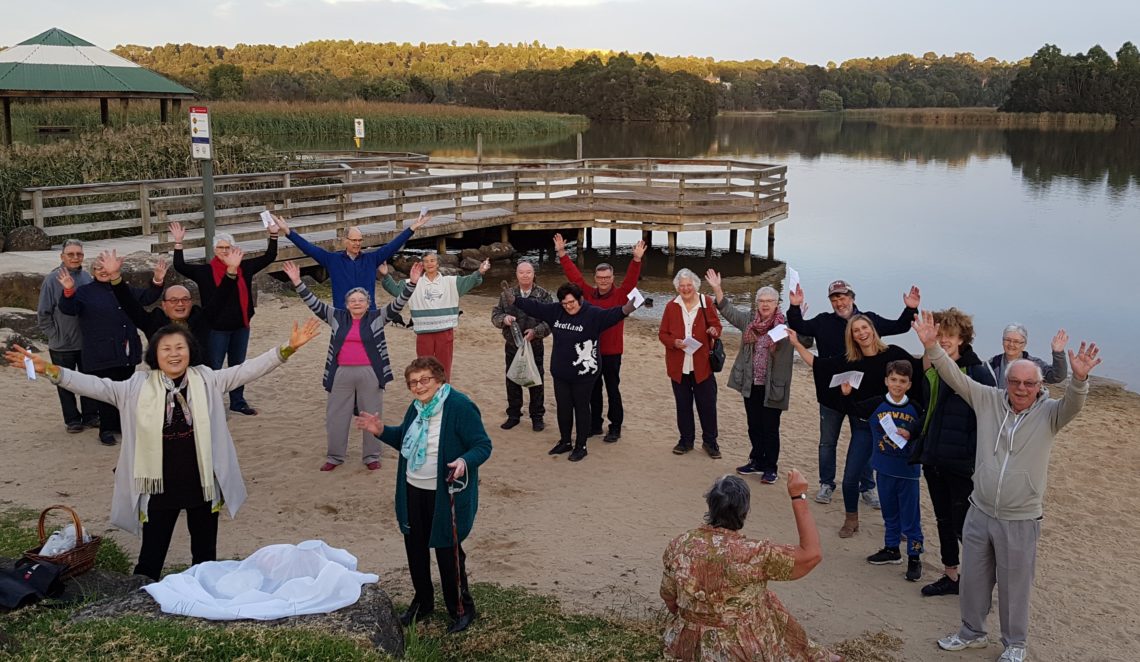
This week marks the 42nd anniversary of the formation of the Uniting Church in Australia. To celebrate the occasion we are meeting with our sisters and brothers from nearby Uniting Churches at Billanook College in Mooroolbark (located off Cardigan Road, see map).

Leading up to the time of Union, there was optimism and hope that the coming together of three distinct church denominations might be the start of a larger movement towards union. Hence the name chosen for this newly forming church was the Uniting Church, rather than the United Church as in some other countries. Sadly this vision has not been realised in practice, although there remain good and close relationships with many denominations and indeed other faiths.

Through the last 42 years, the Uniting Church has attempted to walk faithfully and has been at the forefront of seeking reconciliation with the First Peoples of Australia, of recognising the important place of women and lay people in ministry, and in the search for justice and welcome of all people including the LGTBQI+ community. There have been challenges, however, in other aspects of our life together. For instance, many Uniting Church congregations are ageing and have struggled to connect with younger people, and we are still grappling with what it means to be a truly cross cultural church.

Our hope for the future does not lie in our own resources or ingenuity, but rather in Jesus Christ who ‘gives life to the dead and brings into being what otherwise could not exist … and, who, in his own strange way constitutes, rules and renews … his Church’ (Basis of Union paragraph 4). So our real challenge is to discern what God is already doing through Christ in our midst – and in the world – and to have the courage to follow.

What God is like

This Sunday is known as Trinity Sunday and provides us with an opportunity to ponder the nature and mystery of God. It is the only day in the church calendar that is named for and celebrates a doctrine rather than an event in church history. It also harks back to the first few centuries of the Christian movement when there were fierce debates about the nature of Christ and, therefore, the nature of God.

The doctrine itself is reasonably simple, namely that the one and only God exists as three distinct persons, Father, Son and Holy Spirit. The reality that this doctrine points to is beyond our understanding, however, despite many creative attempts of trying to explain it. At the risk of going too far, one implication we may draw from the doctrine of the Trinity is that God is community and values self-giving, loving relationships.

So relationship with God, with one another and with our neighbour lie at the heart of our faith.

How God is with us

Pentecost in many ways marks the end point of the story arc of Jesus that begins each year in Advent. This story includes the birth, baptism, ministry, death, resurrection and ascension of Jesus and culminates in Jesus pouring out the Spirit on the new church (Acts 2:33). But Pentecost also marks a new beginning point, enabling God’s purposes through Jesus to extend way beyond Galilee and Jerusalem out into the whole world – through the emerging Christian community. The Spirit will not only guide the footsteps of this community but also be how God is present in and among and through them.

So we celebrate Pentecost as the birth of the Church, a movement that has shaped our world for nearly 2000 years, often for good and sometimes for the worse. An ever present question for us, then, is what is the Spirit calling us to today, in our place and time? How do we continue to build a movement that offers praise to God, generous kindness to our people and yet is outward looking and having the good will of our wider community (as in Acts 2:42-47)?

A new beginning

Sunrise at Chirnside Park (photo courtesy of Jill Davison)

For the first followers of Jesus, his ascension marked the beginning of a new venture – when they would have to work out their message and their approach to the world – without the direct presence of Jesus to lead them. The future was unknown but was in their hands now.

Likewise for the Israelite exiles living in Babylon in the book of Isaiah. As the years roll on they slowly lose hope that God will act to redeem them so they can return home to Jerusalem. As they wait, the prophet tells them to open their eyes to what God is about to do … something new, something unheard of …

And for the folk at Croydon, a new chapter begins with a refurbished building and new look worship space. What does the future look like from here? Perhaps there is wisdom to learn from the folk at Croydon North … a new space takes time to grow into … but offers all sorts of new possibilities. Let us all be listening to God as we explore new directions.

Living the Christian life

It often seems there is much to be fearful about. If we follow the stories presented to us in the media, we will be afraid of using Facebook, or afraid of catching the flu this winter or afraid about irreversible climate change. Perhaps we will even be afraid for the future of the church in our culture.

In this week’s reading from John’s Gospel, Jesus assures the disciples that they need not fear because he will not abandon them in the world but will come to them – through God’s Spirit – and bring them peace and love. This part of the Spirit’s role is like breathing in. The reading from Acts 16 describes another of the Spirit’s roles,directing the mission of the church, guiding our steps and giving us courage to speak about Jesus. This is the breathing out part.

If we want to live a healthy Christian life, then using this analogy, we need to practise both breathing in and breathing out, taking time to spend with God as well as serving and witnessing in the world. Which part do you need more of in your life?

Reverberations of Easter

As I write this message, we are drawing towards the end of a hard fought and at times bitter Federal election campaign. It has highlighted again the divisions and barriers that we like to erect between different ‘tribes’.

It was not much different in Jesus’ day. While most Jews were united in their hatred of the occupying Romans and distrustful of their distant cousins, the Samaritans, there was considerable animosity between various Jewish political groups. In this contested space, Jesus offers an alternative way. Love one another. No ifs, no buts, no exceptions, no limits. Just love one another. Let that become the symbol to the waiting world of the new Christian community. And before we are tempted to make this too exclusive, God’s view of ‘one another’ is broader than we can imagine and includes those we feel sure are outside the sphere of God’s blessing.

Love one another. So simple to say and yet so difficult to embody and live out. What might it take for our neighbours to remark, how those Christians love one another?

Mothers and shepherds

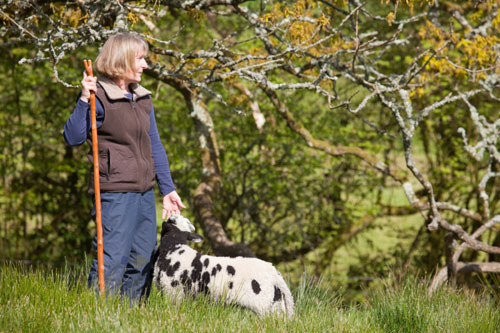
I’ve been thinking about mothers in the lead up to Mother’s Day. My own mother … the sacrifices and struggles of the late mother of Bill Shorten whose story has been in the news this week … asylum seeker mothers locked up in detention … new celebrity mother Meghan, Duchess of Sussex … What these and other significant women in our lives teach us is that love involves gentleness, toughness, fierce protection, sacrifice, much kindness and patience, and the desire to bless those in our care.

These are also characteristics that apply to Jesus the good shepherd, as described in John chapter 10. The shepherd knows his sheep intimately, calls them by name and leads them to what is needed for life, abundant life. The shepherd will do whatever is necessary to keep the sheep safe, even laying down his own life.

What might we learn from the example of mothers (and significant others) and that of the good shepherd in terms of how we bless others and what we are prepared to do to help them reach their full potential?

Life after Jesus: new marching orders

The diverse Gospel stories about the resurrection of Jesus have several common elements. These include the transformed appearance of Jesus, the amazement of the disciples and a call to carry on the mission of Jesus after he has gone (see for instance Luke 24:46-48, Acts 1:8). This call to mission was the impetus that started the church, as Jesus’ disciples – both women and men – shared his message and acted as witnesses to Jesus.

The call to witness has been handed on like a relay baton from generation to generation of Christians and involves both words and actions, both speaking the good news and living it out. In the Uniting Church we are generally much more comfortable with the second approach, namely showing the love of God in how we treat and interact with others. The challenge for us is to overcome our reticence and fears and learn how to share the good news of Jesus respectfully in words. However inconvenient, it is part of our call to be faithful disciples. Will we dare to take up this challenge?