Welcome to a new world

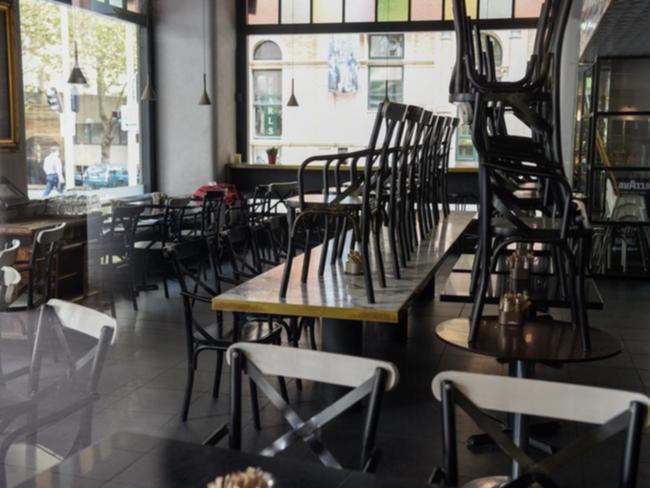
So much has changed in the world we know in the last 10 days. We have gone from a normally functioning society to one where we are told to stay home indoors for the foreseeable future to reduce the spread of corona virus. Our country is slowly being locked down. Tens of thousands of people have lost their jobs. Share markets and investments have crashed. Streets and stations are eerily quiet. The footy has been cancelled for months. Supermarkets are calm again – although many shelves remain empty. There is a feeling of grimness and heaviness that we all feel. These are serious days.

The church is affected just like every other group. Our Sunday services at Croydon North and Croydon will no longer be happening. Groups such as Playgroup, weekly Tuesday community lunches, Evening Fellowship, Drop-In, the Pastoral Care service have all been postponed until further notice. Funerals, if required, will be limited to ten people. Weddings to just five people. We are working with Maroondah Council to see if we can keep Helping Hand open with a new set of younger volunteers.

What all this illustrates is how fragile our society really is. So much of what we rely on day to day has been cancelled or taken away. So in times like this, where do we turn to for hope and reassurance? One passage that I’ve been reflecting on this week is Philippians 4:4-7, where Paul is encouraging the church community not to turn inward and not to lose hope. He reminds them that God is always near and that when we feel anxious or worried we are urged to pray and make our requests known to God. This helps lift the burdens we are carrying. Mysteriously, in exchange we will receive God’s deep and enduring peace in our hearts.

For the next several weeks or months – however long these restrictions last – a weekly resource for worship at home will be prepared and emailed out/delivered on a Friday. Messages from previous Sunday’s can be found on the Croydon website to download (PDF) and read. News from the community will also be circulated. If you have a good news story to share, an encouragement, or a need for prayer, please contact Peter Mallen or Peter Mitchell in the Croydon office and we will include these as part of our weekly church@home. Hopefully you will also receive a friendly phone call from a member of the congregation. You are of course encouraged to keep in touch with your friends and family by phone or Skype or Facebook Messenger or whatever technology you feel comfortable with.

Click here for worship@home resources for 29 March 2020 (74 downloads)

This week for the Exploring faith group we trialled a video conferencing app called Zoom so we can meet together from the comfort and safety of our own homes. We will also be using this app for future Church Council meetings. We are exploring various options for how we might record the whole or parts of a worship service and upload to the Croydon Uniting Church website (https://croydon.unitingchurch.org.au/).

Through these days, remember that we are not alone because Jesus has promised to be with us always (Matt 28:20). We also have the support of each other. So stay strong and remember to be kind and loving towards others.

Rev Dr Peter Mallen


A few light-hearted insights from Facebook this week …

From a UCA church noticeboard:
Dear God, Can we reboot 2020? It has a virus that is shutting everything down.

For the first time in history, we can save the human race by laying down in front of the TV and doing nothing. Let’s not screw this up!

Day 5 of social distancing: Struck up a conversation with a spider today. She seems nice. She’s a web designer …

I just asked a six year old if he understands why there is no school today. Serious as heck answer: because they are out of toilet paper.

A Prayer for a Pandemic

May we who are merely inconvenienced
remember those whose lives are at stake.
May we who have no risk factors
remember those who are most vulnerable.
May we who have the luxury of working from home
remember those who must choose between
preserving their health or making their rent.
May we who have the flexibility
to care for our own children when their schools close
remember those who have no options.
May we who have to cancel our trips
remember those who have no safe place to go.
May we who are losing our margin money
in the tumult of the economic market
remember those who have no margin at all.
May we who settle in for a quarantine at home
remember those who have no home.
As fear grips our country,
let us choose love.
During this time when we cannot physically
wrap our arms around each other,
let us yet find ways to be the loving embrace of God
to our neighbours.
Amen
(Source: Queensland Churches Together)

Are you listening? Are you following?

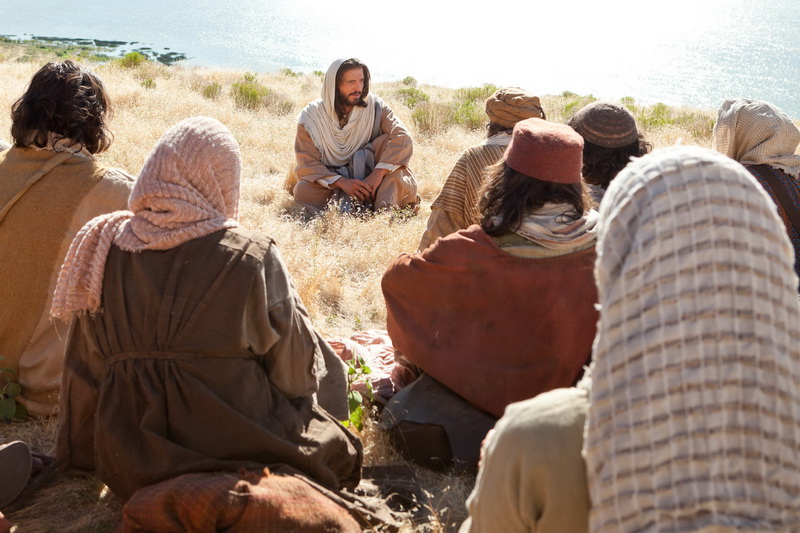
This week we bring our series on the Sermon on the Mount to a close as we explore Matthew chapter 7. The most memorable verse in this section is verse 12 – the so-called ‘golden rule’ – that reads ‘Do to others as you would have them do to you’. This simple and positive statement provides a summary of the sermon as a whole and links back to Jesus’ earlier calls to live out what he says.

This ‘rule’ is not actually a rule at all, but rather is about priorities and heart attitudes that lead onto actions. If our heart is concerned with status or wealth-seeking, or having power over others, or anger when our demands and wants are not met, then we will struggle to live in the way Jesus intends. However if we focus on generosity, compassion, justice and mercy then our lives will reflect the way of Jesus.

Lest we despair of ever reaching this high calling, it’s worth remembering that to have any hope of walking this road, we are reliant on God’s grace, God’s love and God’s empowering along the way. And the support and encouragement of fellow travellers. May this call both inspire us to action and also compel us to seek the help of God’s Spirit and one another.

What do you treasure?

This week we are continuing to explore the challenging message from the Sermon on the Mount. Matthew lists two particular challenges in chapter 6 that may prevent us from whole-heartedly following the ways of God. They are worrying what other people may think of us (6:1-18) and the lure of material possessions (6:19-34).

We may not often pause to recognise it, but we live in an extremely materialistic culture and have money and possessions beyond the imagination of most of the writers of the NT. Jesus warns us that these material blessings are a direct threat and competitor to our devotion to God. Our hearts are beholden to what we treasure.

One definition of what we treasure is what we could not bear to lose. So I wonder how we might cope with losing everything we own (as many families experienced during the bushfires over summer). Ultimately it’s a matter of trust – do we really trust that God will somehow provide what we need (our ‘daily bread’)? If the answer is yes, then we can hold lightly to our possessions. If the answer is no, then perhaps we do treasure what we own more than our relationship with God.

Jesus’ upside down message

This week we are exploring two very famous passages – the beatitudes that begin the Sermon on the Mount found in Matthew chapters 5 and the companion text from Micah chapter 6, namely the call to do justice, love kindness and walk humbly with God.

How do we ‘hear’ these passages afresh? The instructions in Micah 6, for instance, are easy to mentally l agree with, but very challenging to live out. They require no less than to reflect the character of God in how we live. And if justice lies at the heart of God, then how are we, personally, actively pursuing justice for our indigenous peoples, or asylum seekers, or those living on Newstart allowance? If we are not making a personal response to do justice then have we really heard the call?

The beatitudes are equally challenging. Our tendency is still to think that the ones God blesses are the rich, the powerful, the healthy, etc. Instead Jesus says that God’s blessing is available to all of humanity, even for the types of people we regard as hopeless, those – we think – who are beyond God’s interest or care. If we allow them to, these beatitudes will change how we see other people and direct us to the sorts of people Jesus naturally gravitated towards.

Jesus calls disciples to community

This week’s reading has Jesus walking by the Sea of Galilee and calling two sets of fishermen brothers. According to the presentation in Matthew, they immediately leave their nets, their homes and their livelihoods behind and go with Jesus. The first community of followers of Jesus is thus formed.

One question that quickly springs to mind is how and why these practical folk just dropped everything to follow Jesus. We suspect there is more back story (as hinted at in Luke’s and John’s accounts) but here we’re not told. A second question may be what did Jesus see in these four fishermen (as well as what they saw in Jesus). I think Jesus saw potential, courage and resilience. I wonder what qualities Jesus sees in you (perhaps these and other talents)?

This Sunday is also Australia Day, the increasingly contested day on which we celebrate ‘modern’ Australia. In doing so, we risk continuing the colonial project of suppressing indigenous people and excluding their story and their history. Let us be mindful then of how we, as part of the dominant culture, treat other groups in our society.

Learning from our indigenous brothers and sisters

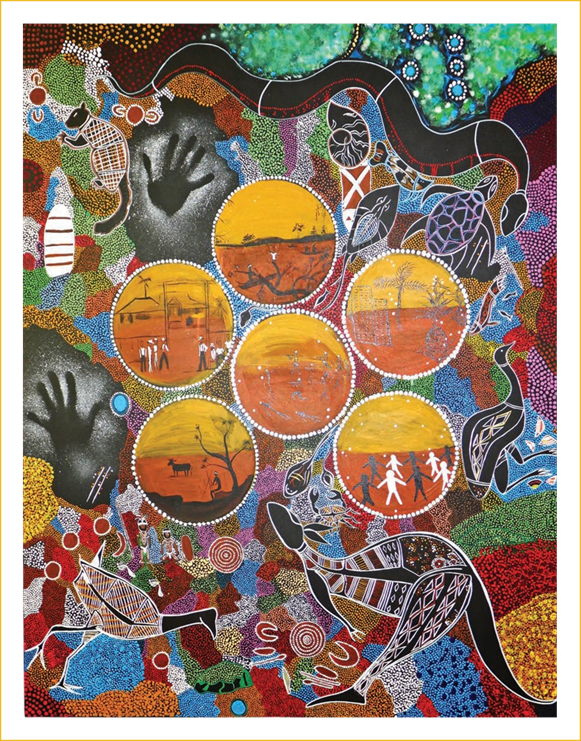
Picture by Sammy Ray Jones depicting massacre at Murdering Creek in 1869

We will again be having a Day of Mourning service in the lead-up to Australia Day, as suggested by the UCA Assembly. President Deidre Palmer writes, ‘the service encourages us to pause to remember the violence and dispossession inflicted on our First Peoples, and to lament that as a Church and as Second Peoples, we were and remain complicit. It is an opportunity for us to listen and learn of the hurt that has been passed down through generations of First Peoples and the ongoing disadvantage and injustice they still experience. Importantly it is an invitation to us to follow in Christ’s way of justice, healing and reconciliation, building relationships of truth and healing in our own communities and in our nation’.

Will you join me in continuing to pray for justice and healing in our nation?

The heart of baptism

This week we jump from stories of Christmas and the birth of Jesus to the account of his baptism by John. This account is quite brief and doesn’t address the questions we may have about baptism (e.g. why was it necessary for Jesus to be baptised? what is the ongoing significance of our baptism?). When this reading is placed alongside the reading from Isaiah 42:1-9, however, we begin to see some common threads.

First, baptism is about being named and affirmed by God. In Isaiah the people are named as God’s servant in whom God delights. Jesus is named at his baptism as God’s Son with whom God is well pleased. Similarly for us, we are named and affirmed as God’s children at our baptism.

Second, baptism is about being empowered or equipped for ministry and for our vocation in the world. God’s Spirit is placed on the servant in Isaiah and descends on Jesus at his baptism in the form of a dove. Similarly for us, at our baptism we invoke God’s Spirit to bless and equip us for living a godly life (in the baptism liturgy this is marked by the several responses that begin ‘With God’s help…’).

Following these commitments by God towards us, the third thread is our commitment to God, or our purpose in the world. For the servant in Isaiah it is to bring justice and light to the nations. For Jesus it is to announce and establish the kingdom of God. As followers of Jesus, our baptism calls us to join Christ’s ministry in the world. This involves loving our neighbour as ourselves, striving for justice and peace, respecting the dignity of and seeking Christ in every person, and proclaiming the good news of God in Christ by word and example.

These commitments are ongoing and apply to every Christian, irrespective of our age or stage of life. This is a high calling that is only possible with God’s help and direction. So this week, and every week, let us remember our baptism and be thankful.

The Christmas road less travelled

This week is Epiphany when we hear the ‘other’ Christmas story from Matthew’s Gospel. It’s much darker, grittier and more dangerous than the family friendly Christmas story from Luke’s Gospel. Wise men from the east (non Jews) come seeking Jesus to worship him, while the Jewish rulers in Jerusalem either ignore the one born to be king or plot to kill him.

How are we to hear this story? Is it a story of God calling the stranger into the fold of blessing? Is it a story of evil that tries to squash any threat to the status quo? Is it a story of resilience in the midst of adversity as the family flee as refugees? Is it a story of God’s grace, or a story of grief as the innocent children are murdered, apparently forgotten by God?

The Christmas story as told by Matthew contains all these elements and more. It shows that those in power will fight to hang onto their power. It also shows that God’s blessing is not restricted to any one group or culture. Perhaps Matthew is telling us in stark terms that the gospel is always heard in a contested space. The question for us is whether we are helping or hindering the spread of this message of good news.

What is the significance of the Christmas story for you?

Christmas is here! For many of us this means a time to gather with family and friends and share a sumptuous meal. For others, this day brings sadness as we remember those no longer with us, or loneliness as we have no place to go. For those newly arrived in Australia, from various religious backgrounds, Christmas Day is a confusing experience as a secular country stops for a religious festival.

The four Gospel accounts of the life of Jesus are equally split in how they present the story and significance of Jesus’ birth. The earliest Gospel, Mark, makes no mention of it at all. Matthew and Luke in their own way address this omission. Both these Gospels stress God’s pivotal role in events, with Matthew telling the story from Joseph’s perspective and Luke from Mary’s perspective. The final Gospel of John takes the story way back to creation to stress the divine nature of Jesus.

For those of us who profess to be followers of Jesus, it’s difficult to free the Christmas story from its cultural and materialistic wrappings. At its heart, though, the story speaks of God acting to bring light and love into a darkened world through the person of Jesus. His birth marks a new beginning, offering new possibilities. How has this story shaped your life? What is its significance for you?