Jesus’ third way for communities

While much of our culture (and especially our advertising) focuses on the individual, as a society we can also be quite tribal. This can be positive – as when people band together in times of natural disasters – or can be negative – as when we pick on one group (e.g. African youth). Jesus offers a third way, which is to treat everyone as we would like to be treated. This is a blueprint for a new community, a new humanity where there is no distinction any more between people, or between tribes, or even between friends and enemies.

Jesus’ call to love our enemies, though, seems a step too far… enemies are the people who hate you, say mean things about you, abuse you or take what is rightfully yours. Our natural response to enemies is either to want to fight them or flee from them. But Jesus commands that we do good to our enemies, pray for them and generously share with them. Sound difficult? You bet! It’s only possible with the transforming work of God’s Spirit in our lives to give us the desire and ability to live this way. It’s nothing less than learning to embody and live out the very character of God, day by day.

God’s upside down kingdom

Sometimes it’s good not to take Jesus too seriously, especially when Jesus speaks about matters that impact directly on our lifestyle. Many of us have experience with this approach. For instance, we are adept at ignoring much of Jesus’ teaching about money and power, for otherwise it would require us to do a major rethink about our priorities and practices.

This week’s Gospel reading is a case in point. It’s Luke’s equivalent to the Sermon on the Mount. As in that famous sermon it begins with a series of blessings for unexpected people – the poor, the hungry, those who weep and those who are rejected for associating with Jesus. But Jesus then ups the ante by also pronouncing woe on the rich, the well fed, those who laugh about life and those who are praised. These are startling and provocative words. Is Jesus really advocating the benefits of poverty, hunger and mourning over the alternatives? Yet these recipients of blessing reflect Jesus’ wider ministry and his interactions with both rich and poor. They also reflect the character of the God revealed in the OT prophets, who seems to have a distinct bias towards the needs of the poor. Where do we stand in relation to Jesus’ upside down kingdom? What might need to change if we take Jesus’ words seriously?

Jesus calls us to discipleship

Sometimes, completely out of the blue, our lives can be transformed in an instant. Something similar happened to Simon Peter one day as he was quietly minding his own business mending his fishing nets. Jesus comes along and wants to use his boat as a portable pulpit. When Jesus has finished teaching, he invites Peter to go fishing, and that’s when the unexpected happens as Peter hauls in an extraordinarily large catch of fish.

This is a turning point moment, a God moment. Peter recognizes the potential of this moment and like Moses and Isaiah and many others through history, suddenly recognizes his own shortcomings. But Jesus sees other qualities in Peter and invites Peter to join his ministry of bringing life to people. Peter overcomes his fears and hesitations and follows Jesus (see Luke 5:1-11).

We too are invited afresh each day whether we will choose to follow Jesus, putting aside our fears and shortcomings, and listening instead to the quiet voice inviting us to join with Jesus in bringing life to others.

How might we reject Jesus?

At times, the words and approach of Jesus are truly extraordinary. We marvel at his compassion or gentleness or inclusiveness. But at other times, Jesus seems to delight in stirring up controversy or confrontation … as in this week’s reading from Luke’s Gospel, which tells the second part of his visit to his hometown of Nazareth (Luke 4:21-30). In language of today, Jesus deliberately pokes the bear and the bear gets angry!

Initially, the townsfolk are pleasantly surprised by Jesus’ gracious words, but this goodwill soon evaporates as Jesus points out to them that God’s grace extends well beyond their limited perspective and even embraces traditional enemies. While all of us are quick to embrace God’s blessing in our own lives, we may find it harder to accept God blessing people we regard as undeserving or unworthy. God’s grace can sometimes be so offensive to us. But that’s when we need to remember that every blessing we receive is a gift … and be thankful.

The Jesus manifesto

This week we are introduced to the public ministry of Jesus in a dramatic scene in Luke’s Gospel as Jesus returns to his hometown of Nazareth. He has been named as Messiah and Saviour and Lord at his birth, but now that Jesus has grown up, what will he say? What will he do?

Jesus reads a favourite passage from the prophet Isaiah that speaks of a Spirit anointed figure who will announce good news, bring freedom to captives, healing to the blind and usher in the time of God’s favour. After a long pregnant pause, Jesus claims to be this figure.

For Luke, this is the Jesus manifesto, setting out who Jesus is and what will be the priorities and shape of his ministry. A key question for us is – is this manifesto just about Jesus and his ministry or does it also apply to us as followers of Jesus? If so, how is it shaping our ministry in 2019?

How are we to understand Mary?

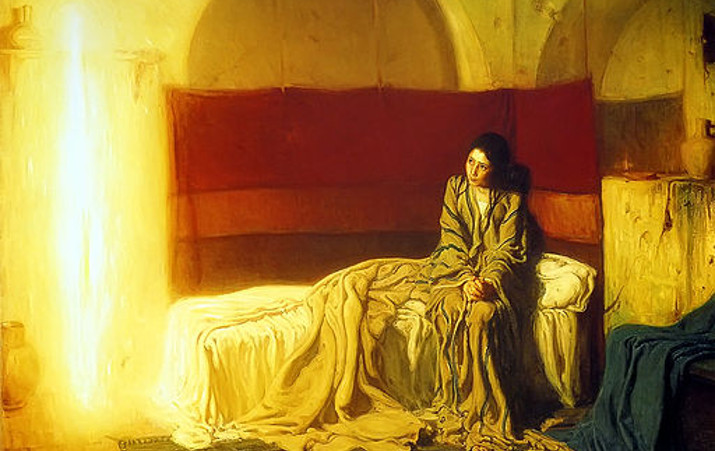
The Annunciation

In this fourth week of Advent, the focus falls on Mary, the mother of Jesus, and her extraordinary story. She first appears as the recipient of startling news about a child she will bear. She is then the one who gives birth to Jesus and so is central to the Christmas story. How are we to understand Mary?

In some traditions of the church, Mary is revered as the God-bearer (Theotokos) or as the saint who intercedes with Jesus on behalf of humanity. Yet in the Protestant tradition we are cautious about giving her a special ongoing place in our practice of faith. Instead we tend to quickly move on from Christmas and Mary disappears from our view.

We might pause this week to reflect on Mary’s remarkable and unique journey of faith. She has several roles including as a forthright prophet (as she speaks the Magnificat), as a nurturer and teacher (of Jesus) and later as a disciple (as part of the early church in Acts 1). What might we learn from Mary about our own journey of discipleship?

Rekindling hope

As the world, the church and even our personal lives appear in a bit of a mess, where is hope to be found?

4 sessions over 4 weeks starting Monday 12 November 2018 exploring the theme of Rekindling Hope by Rev Dr Peter Mallen.

3 Groups are planned – Tuesday 10am at Croydon Church (led by Peter Mallen), Wednesday 7.30pm (led by Paul Chandler) and 10am at Croydon North (led by Liz Mallen). People can go to whichever session is more convenient and some overlap between congregations is encouraged! Depending on demand there may be other groups.

Titles of each session are as follows:

  • The need for hope
  • Hope in the midst of darkness
  • Hope was heard singing
  • Hope for today and tomorrow

Each study will include time for personal reflection, opening the Scriptures together, a response activity, praying with and for one another and a song. It’s estimated each session will last around 1.5 hours.