Mothers and shepherds

I’ve been thinking about mothers in the lead up to Mother’s Day. My own mother … the sacrifices and struggles of the late mother of Bill Shorten whose story has been in the news this week … asylum seeker mothers locked up in detention … new celebrity mother Meghan, Duchess of Sussex … What these and other significant women in our lives teach us is that love involves gentleness, toughness, fierce protection, sacrifice, much kindness and patience, and the desire to bless those in our care.

These are also characteristics that apply to Jesus the good shepherd, as described in John chapter 10. The shepherd knows his sheep intimately, calls them by name and leads them to what is needed for life, abundant life. The shepherd will do whatever is necessary to keep the sheep safe, even laying down his own life.

What might we learn from the example of mothers (and significant others) and that of the good shepherd in terms of how we bless others and what we are prepared to do to help them reach their full potential?

Life after Jesus: new marching orders

The diverse Gospel stories about the resurrection of Jesus have several common elements. These include the transformed appearance of Jesus, the amazement of the disciples and a call to carry on the mission of Jesus after he has gone (see for instance Luke 24:46-48, Acts 1:8). This call to mission was the impetus that started the church, as Jesus’ disciples – both women and men – shared his message and acted as witnesses to Jesus.

The call to witness has been handed on like a relay baton from generation to generation of Christians and involves both words and actions, both speaking the good news and living it out. In the Uniting Church we are generally much more comfortable with the second approach, namely showing the love of God in how we treat and interact with others. The challenge for us is to overcome our reticence and fears and learn how to share the good news of Jesus respectfully in words. However inconvenient, it is part of our call to be faithful disciples. Will we dare to take up this challenge?

Surprising new life

The traditional Easter greeting is ‘Christ is risen!’ to which the traditional response is ‘He is risen indeed!’. It is also traditional at Easter to sing joyful songs with many alleluias, some of which we will be singing this Sunday. Yet the Gospel accounts of the resurrection paint a very different picture. None of the disciples were singing, none were joyful. Instead they were trying to keep a low profile and had locked the doors.

It was the women who dared to go to the tomb to anoint Jesus’ body with spices, a traditional Jewish custom for the dead. We are told that the stone sealing the tomb had been rolled back and that the women saw a vision of angels. They do not rejoice at the news but rather are terrified and flee. The male disciples struggle to understand their message that Jesus has risen.

Perhaps we are so used to hearing this story that it no longer surprises us or excites us. But the message of Easter is nothing if not astounding. It is God’s ‘yes’ to the world’s ‘no’. May this story of hope and transformation continue to disturb and surprise us.


Good Friday reflection

On Good Friday we hear the Gospel passion narrative as it tells the story of Jesus’ rejection, suffering, death and burial. This is a powerful story that provides us with the enduring symbol of Christian faith, namely the cross. It’s a story that’s told from the perspective of the followers of Jesus as they watch the impossible unfold before their eyes – as the Messiah suffers and dies.

The story never explains why Jesus had to die or exactly what his death accomplished. Initial answers to these questions are supplied by the apostle Paul and later by generations of Christian theologians and hymn writers. These sources provide various explanations.

Western Christianity (as handed down to us through the Catholic Church) places the events of Good Friday at the heart of our faith, with the death of Jesus on the cross seen as the atoning sacrifice for human sin, redeeming us from sin and making possible forgiveness and restored relationship with God. Within this legal framework, the day may well be called ‘Good’ Friday or ‘God’s’ Friday as God deals decisively with the problem of sin. An appropriate response might be thankfulness.

Eastern Christianity (as handed down through the Orthodox Church) has quite a different perspective. The basic human problem is not sin, but rather death that came into the world through Adam and Eve. Through his voluntary submission to the cross – and especially through the resurrection – Jesus overcame the power of death, thus making possible the glorification of humanity, its restoration to the image of God. Good Friday – and Easter Sunday – thus demonstrate the power and victory of God. An appropriate response might be worship.

Progressive Christianity has a different take again. As a prophet, Jesus continually challenged the dominant ruling powers and their injustices (both the religious leadership of Israel and also the occupying power of the Roman Empire). In the way of human society, these powers fought back and did what forces of domination do – silence and eliminate the perceived threat. Jesus’ death was the inevitable result of the clash between power and politics on the one hand and compassion and justice on the other hand. An appropriate response might be to take up the fight for justice.

What are we to make of the story of Good Friday? How do we find our place in the story? Are we among the silent members of the crowd who, out of fear, say and do nothing when Jesus is condemned? Are we like the women who weep for Jesus as a good and innocent person put to death? Are we among the cynical people who mock Jesus for not delivering what he promised, a new society that reflects God’s ways? Or are we fallible followers of Jesus who want to follow but who deep down prefer comfort, respect and taking care of our own needs? Or perhaps do we sometimes feel like Jesus, abandoned by our friends and even by God?

Good Friday offers us a powerful and multivalent story that is open to multiple layers of meaning. The invitation is to sit with the story a while, recognizing that while we are part of broken humanity that is capable of great evil, we are also part of Christ’s family committed to walking in the compassionate and radical ways of Jesus, wherever that road may take us.


Jesus comes to Jerusalem

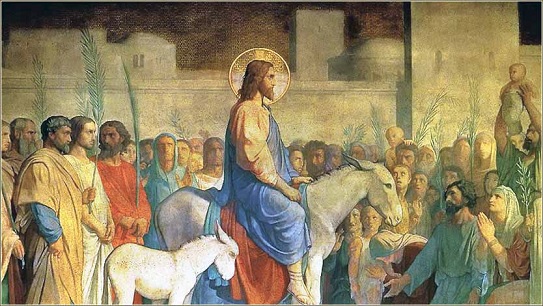
Palm Sunday is the day on which we remember Jesus entering Jerusalem riding on a donkey, while the crowds waved palm branches and sang songs of praise. People were not quite sure what to make of Jesus – was he a radical prophet? A rival king to Caesar? Or simply a compassionate healer and teacher? How could his small band of followers really think that they could make a difference in the cold hard world of power and authority?

What do we see and hear in this story? Do we too place fairly rigid expectations around Jesus or do we let him speak his life transforming words to us? These questions are all valid as we contemplate the place of Jesus and our faith in the world today.

Extravagant faith

During this last week, the Federal Treasurer has handed down the annual Budget for Australia. The headline message is that after several years of careful and prudent financial management, the country will soon, hopefully, balance its books. It’s the sort of Budget that might have appealed to Judas, who was apparently in charge of finances for the disciples.

Then along comes Mary, sister of Martha and Lazarus, and pours a large flask of very expensive perfume all over Jesus’ feet. Here is extravagant faith and deep love in action. Judas is outraged at the waste while Jesus praises her action as a preparation for his burial. I wonder whether we more naturally embrace a mindset of scarcity or a mindset of abundance. Do we tend to ration our resources or are we willing to (at least sometimes) give extravagantly? Last week’s story of the prodigal son and this week’s story about Mary both point towards the extravagance of God’s kingdom. It also points ahead to the costly and extravagant gift of Jesus at Easter.

The compassion and courage of Jesus

As we continue our journey through Lent, we hear this week of Jesus’ determination to continue his ministry and continue on the path towards Jerusalem despite growing threats against him. Jesus likens King Herod to a fox, a cunning and often maliciously cruel animal that kills for sport. Jesus will not be put off course by Herod’s – or anyone else’s – threats, as he is intent on following God’s agenda. Hence he must be on his way and must continue on to Jerusalem where a prophet’s fate – death – likely awaits him.

Jesus also expresses his – and God’s – compassion for Jerusalem. He wants to gather the people of Jerusalem as a mother hen gathers her chicks under her wings – a tender and compassionate image that reflects God’s love for the city and her people. Jesus’ attitude and actions can teach us important lessons about courage and compassion. Will we continue to follow God’s agenda even when there is high personal cost involved? And will we continue to offer God’s grace and compassion to people, even when they threaten or reject us?

Who sets our agenda?

The journey of Lent always starts with the account of Jesus being tempted in the wilderness. This feels slightly odd, as the incident occurs before the start of Jesus’ ministry and not as he turns his face towards Jerusalem and the journey to the cross. Yet in other ways, the temptations or testing described are typical for what Jesus faced throughout his ministry – desires to meet his own physical needs, to seek after power or to be popular.

As Jesus follows the path to the cross he will disappoint many, anger others and be rejected and humiliated. He will also demonstrate clearly that he is following God’s agenda rather than his own. I wonder who sets our agenda? Is it the expectations of others, our fears or our longings, or the quiet voice of God’s Spirit? What will give us the strength and courage to walk in the footsteps of Jesus and follow God’s agenda?

Surprising encounters with God

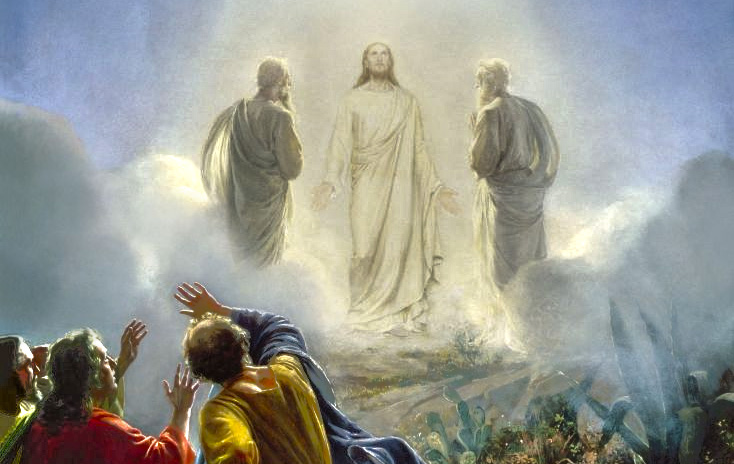
This week’s Gospel passage is mysterious – not that it uses big or strange words – but because it describes an encounter with God that is foreign to most of our common experience. Jesus climbs up a mountain to pray, which is nothing unusual for Jesus. On this particular occasion he takes three of the ‘senior’ disciples with him, which is slightly more unusual. But while he is praying, some very unusual things happen: Jesus’ appearance becomes dazzling, he speaks with two people that the disciples somehow identify as Moses and Elijah, and a voice speaks from a cloud about Jesus.

Welcome to Transfiguration Sunday, the day when we hear this mysterious and profound story about Jesus and are reminded about its significance, yet often go away scratching our heads and wondering what it’s really all about. This is a story that invites us to pull back the veil that usually prevents us from seeing the spiritual dimension of the world, and asks us to journey with Jesus to a thin place where new insights will be revealed. What will we see? What will we hear? And what difference will it make as a result?

Suffering, death and life

Lent Studies 2019 – Commencing week of 4 March

Four studies based on reflections by well known preacher Barbara Brown Taylor on aspects of finding God in the midst of pain and suffering.

These studies invite new ways to think about the Easter story.

Currently, one group will meet on Thursday mornings at CRoydon UC and one group will meet on Friday mornings at Croydon North UC. Other groups may gather at other times, if these times do not suit you.

Further details from Peter Mallen on 0420 818 379 or at    mallen.peter@gmail.com