
Sensible or stupid? It’s your call

I’m not always very patient when it comes to waiting. I can get irritated by having to wait too long at red traffic lights and sometimes get impatient with what can feel like glacial change in the church. But Jesus’ warning to us in this week’s parable is not to get complacent or impatient but to be prepared to wait for what may come.

The parable tells of a wedding and the seemingly endless wait for the bridegroom to arrive. He is not a polite few minutes late but hours overdue. When the bridegroom is finally sighted in the distance, all the waiting bridesmaids light their lamps. But some forgot to bring extra oil. No bother – surely there’s enough to go round? The sensible bridesmaids hold onto their oil and send away the stupid bridesmaids on a fool’s errand to try and buy more oil in the middle of the night. While they are gone, the wedding feast begins and the doors are locked. The silly bridesmaids are left outside as the bridegroom refuses them entry, claiming not to know them.

Are these bridesmaids foolish because they forgot to bring extra oil (and what might this represent in our lives)? Or are they foolish to go off on a wild goose chase searching for oil (and what might this represent in our lives)? Or is their most foolish choice not to be personally known to the bridegroom who could let them into the feast? If we read the whole of Matthew’s Gospel, it is not enough to hear the words Jesus speaks. The sensible person will take Jesus’ message to heart and live by it, day in and day out. Then there will be no anxiety about gaining entry into the wedding feast (a metaphor for the coming kingdom of God) however long it is delayed in coming.


We will be holding a Zoom worship meeting this Sunday morning from 9.45 am. I will host the meeting from my home but it will be an opportunity to hold a larger (virtual) gathering and to see each others’ faces. We will be basing our worship on the attached worship@home resource for this week, so it would be handy to have a copy present. We can send you a link to the meeting or a phone number and meeting details if you sign up by emailing the Croydon UC church office on office@croydon.unitingchurch.org.au or using the form in the sidebar.

Click here for worship@home resources.
Remembering all the saints

There has been an outpouring of joy and thanksgiving across Melbourne this week as many aspects of our life that have been closed for months reopen, including most shops, cafes and outdoor sports. This is our reward for months of restrictions. Numbers at indoor gatherings will remain cautiously low for a while yet, which limits the possibilities for face-to-face worship, but we are already planning for what we might be able to do at Christmas.

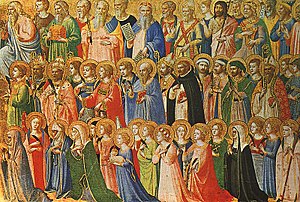
This week in the church calendar is also a time for thanksgiving as we celebrate All Saints Day, a tradition that dates back to at least the sixth century. In the Bible, a saint is anyone whose life is devoted to God, which included all the members of the churches Paul wrote to (e.g. Rom 1:7, 1 Cor 1:2). In the Protestant tradition, we remember saints both living and dead, whether famous or obscure, who have brought us to faith, nurtured us in faith or who continue to inspire and stretch our faith today. As you reflect on the people who have influenced your life, what can you learn from their priorities and approach to life?


We will be holding a Zoom worship meeting this Sunday morning from 9.45 am. I will host the meeting from my home but it will be an opportunity to hold a larger (virtual) gathering and to see each others’ faces. We will be basing our worship on the attached worship@home resource for this week, so it would be handy to have a copy present. We can send you a link to the meeting or a phone number and meeting details if you sign up by emailing the Croydon UC church office on office@croydon.unitingchurch.org.au or using the form in the sidebar.

Click here for worship@home resources

A wise answer to another tricky question

Whether we’ve happily complied with or loathed the Covid19 restrictions of the last several months, most people in Melbourne have been co-operative in following the law. Most of us see the benefit to the wider community of getting the disease under control and the best way to do this is to follow the health laws about wearing masks and so forth.

The Jewish Law contained in the Bible covers a multitude of topics that impinge on community life including disease control, food handling, settling of legal disputes and of course matters of worship. One day Jesus is asked what is the single most important or greatest commandment in this vast array of laws. His answer is succinct and memorable – love God with all your heart, soul and strength and also love your neighbour as yourself.

As Christians we are so familiar with this teaching that it’s difficult to imagine it being anything other than central to our faith. Yet the question asked of Jesus is set as a test or a trap. Perhaps this is because Jesus has had numerous earlier skirmishes with the Pharisees over interpretation of the Jewish Law, especially regarding Sabbath regulations and purity laws. For the Pharisees, Jesus plays fast and loose with the Law. For Jesus, the Pharisees focus on minor matters of the Law and ignore the weightier matters of mercy and justice. So a simple sounding question masks underlying tensions.

While Jesus’ response is memorable, it’s also hard to live out in practice. How do we get the balance right between our call to love God and our call to love our neighbour? And besides, who is my neighbour that I’m called to love? Is it just those of my tribe or those who live nearby? And what might it mean to love them? It’s all very open ended … which is why Jesus’ response is so brilliant. He didn’t provide black and white answers that we could haggle over, but rather asks us to consider in each and every situation how might I best love my neighbour, both during the Covid 19 pandemic and when life has settled back to a more predictable routine?


We will be holding a Zoom worship meeting this Sunday morning from 9.45 am. I will host the meeting from my home but it will be an opportunity to hold a larger (virtual) gathering and to see each others’ faces. We will be basing our worship on the attached worship@home resource for this week, so it would be handy to have a copy present. We can send you a link to the meeting or a phone number and meeting details if you sign up by emailing the Croydon UC church office on office@croydon.unitingchurch.org.au or using the form in the sidebar.

Click here for worship@home resources

Paying taxes and honouring God

Last week the Federal Government handed down its Budget and there was the usual commentary on ‘winners’ and ‘losers’. While people with higher taxable incomes and business seemed to do well, other groups including university students and staff, overseas workers, the unemployed, refugees and people working in hospitality, the arts, retail or tourism seemed to be largely forgotten.

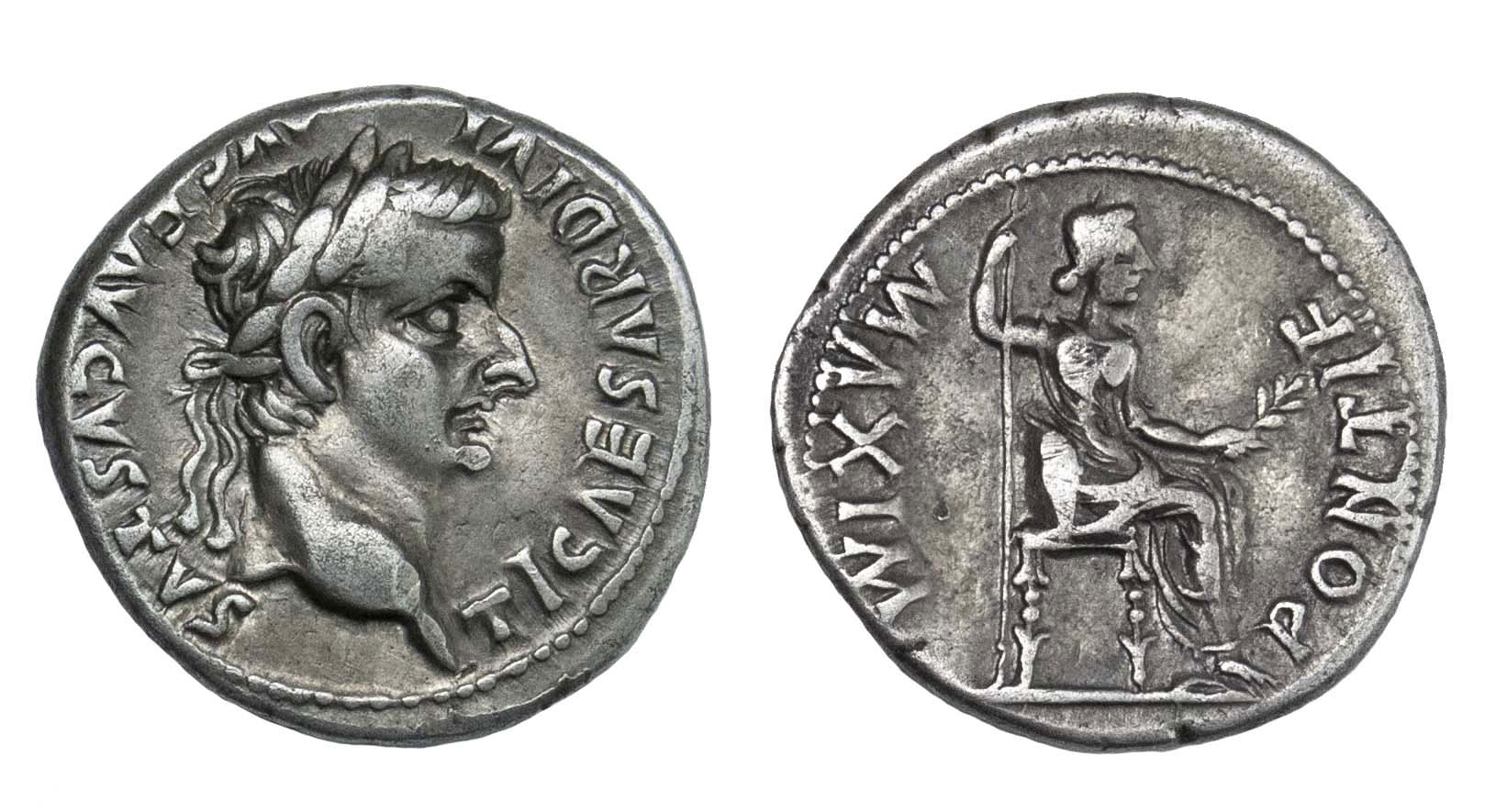
In this week’s Gospel reading, Jesus is asked whether it’s necessary and okay to pay taxes. Jesus dodges the question as either a ‘yes’ or ‘no’ answer will probably land him in trouble. He requests instead that the coin for paying the Roman tax be brought, which carried the inscription Tiberius Caesar, divine son of Augustus, thus making rival claims to Jesus about his identity. Jesus’ wise and challenging response to the question of paying taxes is to give the Emperor his dues – and so pay the taxes he imposes – but also to give due honour to God’s demands, which are rather more all-encompassing as God is the Creator and Sustainer of every aspect of life.

Coming back to our government’s Budget, the cuts to personal and business taxes are no doubt welcome, but I wonder about neglecting those people struggling the most. As I look at the lists compiled of winners and losers from the Budget, it’s hard not to think that our government’s priorities do not line up with Jesus’ priorities for the outcast, the poor and the least. Hence the great challenge of Jesus’ response to give to God what rightly belongs to God – including our worship, our love for neighbour and our commitment to care for the last and the least.


This Sunday we will not be meeting by Zoom for worship. Instead we encourage people to watch and participate in the collaborative service prepared by Heathmont, Ringwood, Ringwood North and our two Croydon congregations. You will see and hear from several familiar faces from Croydon and Croydon North, including Rev Peter. To log in to the service go to the following website https://nruc.online.church/ before 10 am.

If you are unable to join us to participate online, click here for worship@home resources.

Pressing on with Jesus

In these days of coronavirus and the extensive changes we are living through, it’s easy to get despondent and impatient with progress. As individuals and as a community we face an uncertain future over the next few weeks and months that is likely to continue into next year. Psychologists tell us that this continuing stress can cause serious harm to our mental health. Someone who knew plenty about stress and some ways of overcoming it was the apostle Paul.

Paul is nothing if not a polarising figure. He seemed to stir up controversy wherever he went and in the book of Acts is accused of turning the world upside down (Acts 17:6). In a rare autobiographical passage in Philippians, Paul describes the stress of seeking perfection as a Jew. This changed when he encountered Christ. Paul no longer had to rely on his own effort to please God, but now enjoyed a close personal relationship with God through Christ. This led to other problems, however, as Paul was seen by some as selling out his Jewish heritage and so was persecuted by Jews, by some rival Christians and also by Greeks who saw their commercial interests being threatened by Paul’s new religion. And we think we have it tough!

In the midst of the storms and controversies that seemed to follow Paul, his solution was to remain focused on Jesus – not being distracted by his past or rocked by present difficulties – but always pressing ahead. Paul was like a runner in a marathon race – never giving up and always striving to keep putting one foot after the other in pursuit of his calling. Despite his reputation for being uncompromising, Paul suggests that we need to accept differences between us while agreeing on what is central, which for Paul is all about following and knowing Jesus. In our days, how might this focus help us overcome the stress and uncertainty that we face?


There will be no Zoom worship meeting this Sunday morning. Instead please take the opportunity to explore other offerings by local churches or on the internet or TV.

Click here for worship@home resources.

Rivers that provide life

Mullum Mullum Creek in Mitcham

Water is essential for life. Hence rivers and creeks are important parts of the natural landscape and are our focus in this final week exploring the season of creation. Rivers are like the arteries of the land, carrying life-giving water to where it’s needed. But when there is too much rainfall, rivers can flood causing considerable devastation and when there is too little rainfall, creeks and rivers can dry up.

Living in an arid land, God’s people Israel knew plenty about drought and the famines that followed. Prophets such as Amos drew on this imagery and compared the unjust actions of a people ignoring the word of God to the land lacking water. In both cases there is no life. Amos called instead for justice to roll on like a river. Likewise in Genesis 6-9, God sees the unjust ways of humanity and floods the earth before providing the sign of the rainbow and the promise to never flood the whole earth again.

In this country, rivers have always been important. They provided food and life to indigenous people for millennia. For we second peoples, rivers have provided water for stock, irrigation to grow crops and for hydroelectricity. Yet we have done much damage to our rivers through building dams, through extracting too much water for irrigation and by allowing excess fertiliser to pollute the water. The massive fish deaths in the Darling River system in 2019 illustrated the effects of our greed and shortsightedness. The rivers are groaning and crying out for justice. Will we change our ways and value the life that rivers support or will we continue to see rivers mostly as a resource to be exploited for profit?


We will be holding a Zoom worship meeting this Sunday morning from 9.45 am. I will host the meeting from my home but it will be an opportunity to hold a larger (virtual) gathering and to see each others’ faces. We will be basing our worship on the attached worship@home resource for this week, so it would be handy to have a copy present. We can send you a link to the meeting or a phone number and meeting details if you sign up by emailing the Croydon UC church office on office@croydon.unitingchurch.org.au.

If you are unable to join us to participate online, click here for worship@home resources.

Learning from a wilderness experience

This week the season of creation encourages us to focus on wilderness. This term may evoke images of Tasmania’s rugged landscapes or the arid landscape of central Australia or even the remote areas of the Kimberley. What these places share is a lack of people and an intrinsic beauty. They can also be deeply spiritual places where we feel close to God.

In the Scriptures, the wilderness or desert was an uninhabited and dangerous place. It was generally a place to be avoided due to its lack of food and water. Some notable characters fled into the wilderness to avoid persecution (e.g. Moses, David, Elijah) while others were driven into the wilderness against their will (e.g. the Israelites escaping from Egypt during the Exodus, Jesus after his baptism). One common element of these stories is that the people encountered God in the wilderness, who provided their basic needs and also shaped their faith. So spending time in the wilderness can be transformative.

Sometimes the wilderness is not a geographical place but rather a psychological or mental space that we find ourselves in. So for many people the extended Covid19 lockdown in Melbourne has felt like a wilderness experience, cut off from other people and with a focus on just getting through each day. What might we learn from such an experience? Perhaps that we can’t rely on our own limited resources. Perhaps that God provides what we really need. Perhaps that we can discern what really matters in life. However difficult these days may feel, may they be a season of growth and transformation for ourselves as individuals and also for our communities.


This Sunday we will not be meeting by Zoom for worship. Instead we encourage people to watch and participate in the collaborative service prepared by Heathmont, Ringwood, Ringwood North and our two Croydon congregations. You will see and hear from several familiar faces from Croydon and Croydon North, including Rev Peter. To log in to the service go to the following website https://nruc.online.church/ before 10 am.

If you are unable to join us to participate online, click here for worship@home resources

The groaning of the land

This week’s focus in the season of creation is the land. Many of us may be fondly attached to our small suburban block where we live and may have a favourite location to visit on holidays, but our relationship with the land is very different to that of indigenous people. For them the connection to land is visceral and spiritual.

In our reading from Genesis 3 this week, we learn that the land was implicated in the fallout from the earlier incident involving Adam and Eve and the serpent. It will grow weeds and thorns and not readily yield crops. It is not clear why the land is implicated except that the rift between God and humanity involves the whole of creation, including the land. In Paul’s commentary on this Genesis passage in Romans 8:18-25 he notes that creation is groaning and frustrated and longs for freedom. These deep emotions are not something that we white people readily associate with the land, but indigenous people do feel the connection.

Why is the land groaning? Because we have mistreated it through over cropping and over grazing it, through prolonged droughts worsened by climate change and through overuse of chemical fertilisers and pesticides. It is time to repent and change our thinking and our ways. Our greed and appetite for ever more things is slowing killing the planet. Yet the Romans reading suggests there is hope for creation, tied in with the broader Christian hope of redemption. We humans are clearly part of the problem but we are also a key part of the solution.


We will be holding a Zoom worship meeting this Sunday morning from 9.45 am. I will host the meeting from my home but it will be an opportunity to hold a larger (virtual) gathering and to see each others’ faces. We will be basing our worship on the attached worship@home resource for this week, so it would be handy to have a copy present. We can send you a link to the meeting or a phone number and meeting details if you sign up by emailing the Croydon UC church office on office@croydon.unitingchurch.org.au or using the form in the sidebar.

Click here for worship@home resources.
The beauty and importance of forests

With spring in the air it seems most appropriate to focus on the season of creation during the next month. This first week the focus is on forests and the creation story from Genesis 2 highlights that the original home of humanity was in a garden surrounded by trees. These trees were beautiful to look at and their fruit and seeds were useful for food. There was an easy interdependence as humanity for its part was called to care for the garden and the trees.

During this season of creation we are also being encouraged to reflect on what it might mean to enact a Jubilee for the earth, a year where crops were not planted or harvested and the earth had a rest. In some ways, the Covid19 pandemic has provided this unexpected rest for the earth as plane travel has all but stopped and car travel is greatly reduced. It’s provided an opportunity for many of us to slow down, to hear the calls of birds singing, to go for more walks and appreciate the natural beauty in our neighbourhood.

But we must also recognise that the greatest threats to our forests are human based – land clearing and climate change – and these carry on apace, unaffected by the pandemic. Unless all of us start to take these threats seriously and choose to make some changes in our own daily habits, then our beautiful and spirit restoring forests will continue to dry out, burn or be bulldozed. To learn more about what we can do, make an effort to watch or rewatch the recent series on ABC TV Fight for Planet A. We can also write an email or letter to our politicians asking them to take meaningful action on climate change.


We will be holding a Zoom worship meeting this Sunday morning from 9.45 am. I will host the meeting from my home but it will be an opportunity to hold a larger (virtual) gathering and to see each others’ faces. We will be basing our worship on the attached worship@home resource for this week, so it would be handy to have a copy present. We can send you a link to the meeting or a phone number and meeting details if you sign up by emailing the Croydon UC church office on office@croydon.unitingchurch.org.au or using the form in the sidebar.

Click here for worship@home resources.
Jesus’ inconvenient invitation

Our prayers often involve asking God to bless us and those we love with good health, with strength and with peace. In praying these prayers we take our cue from the Psalms, where people and communities cry out to God for help, reminding ourselves – and God – about God’s character of love and faithfulness.

Sometimes, though, the situation is reversed and God asks things of us. And these requests and invitations are not always easy or comfortable. In two of our readings this week, people are called upon to make momentous decisions that have far-reaching implications for their lives. In one instance, God calls Moses to return to Egypt to rescue God’s people from slavery under Pharaoh. This is more than inconvenient for Moses – it’s extremely dangerous and difficult. God promises to go with Moses, but it’s a big call.

In the Gospel reading, Jesus invites the disciples – and anyone else who wants to follow him –  to embrace suffering, just as he will walk a path of suffering all the way to the cross. According to Jesus this is the way to find true life. Again this is most inconvenient, especially in our culture that seeks comfort and pleasure at every opportunity and avoids suffering if at all possible.

The challenge for us, then, is to have the faith to hear and the courage to respond to God’s call, wherever it may take us. As the proverb suggest, a boat in the harbour is safe, but that is not what boats are built for.

What inconvenient but life-giving invitation may God be calling you to and how will you respond?


We will be holding a Zoom worship meeting this Sunday morning from 9.45 am. I will host the meeting from my home but it will be an opportunity to hold a larger (virtual) gathering and to see each others’ faces. We will be basing our worship on the attached worship@home resource for this week, so it would be handy to have a copy present. We can send you a link to the meeting or a phone number and meeting details if you sign up by emailing the Croydon UC church office on office@croydon.unitingchurch.org.au or using the form in the sidebar.

Click here for worship@home resources