God is with us … always

As the number of coronavirus cases across Melbourne continues to escalate day by day, the Premier’s daily briefings have become a regular and disturbing part of our new normal. These are harder days to live through than the previous lockdown, which involved the whole country and where it seemed easier to trace the spread of new infections. The threat feels more serious this time, with the wearing of masks becoming compulsory outside the home.

So in the midst of these challenging times, where is God to be found? How do we hold on to hope and peace? How do we even begin to know how to pray?

There is comfort in this week’s passage from Romans. Paul knows a thing or two about feeling weak and helpless. It’s at these times that we can turn to God’s Spirit to provide the strength and grace we need and to help us to pray. The Spirit – who searches our hearts and also knows the will of God – intercedes for us with sighs and groans too deep for words (Romans 8:26). God knows what we need even when we can’t quite express it in words. Paul also assures us that nothing in the whole of creation – not the threat of coronavirus – not hardship or even death – can keep us apart from the love of God in Christ Jesus (8:39).


We will be holding a Zoom worship meeting this Sunday morning from 9.45 am. I will host the meeting from my home but it will be an opportunity to hold a larger (virtual) gathering and to see each others’ faces. We will be basing our worship on the attached worship@home resource for this week, so it would be handy to have a copy present. We can send you a link to the meeting or a phone number and meeting details if you sign up by emailing the Croydon UC church office on office@croydon.unitingchurch.org.au or using the form in the sidebar.

Click here for worship@home resources

The problem of weeds

This week’s parable about weeds is every farmer’s or home gardener’s nightmare. You plant good seed into your carefully prepared soil and what comes up? A surprising mix of the plants you want plus a whole lot of unwanted weeds. Where did the weeds even come from? You certainly didn’t plant them – but there they are anyway! The question is … what to do now?

The wisdom from the parable is to be patient and to let the weeds be and let them grow up along with the plants you want, lest you uproot the good plants. Then when it’s harvest time, it will be obvious which are the weeds and they can be pulled up and tossed out and you can then gather the plants you want.

Who does the parable apply to? Commentators have seen it as applying to both the good and evil in the world at large and also within the church community, where sometimes the weeds simply must be removed (e.g. evidence of child sexual abuse that was not acted upon). But perhaps it also applies to our own hearts, where there are both good desires and blind prejudices. It’s good that God is patient with us and allows the gentle work of the Holy Spirit to keep working at our flaws and failings.

This Sunday we will not be meeting by Zoom for worship. Instead we encourage people to watch and participate in the collaborative service prepared by Heathmont, Ringwood, Ringwood North and our two Croydon congregations. You will see and hear from several familiar faces from Croydon and Croydon North, including Rev Peter. To log in to the service go to the following website https://nruc.online.church/ before 10 am.

If you are unable to join us to participate online, click here for worship@home resources.

Puzzling over parables

Jesus loved using parables to get his message across. These simple stories and images drawn from everyday life conveyed deeper truths for those with ears to hear. For many in the crowds who heard these stories, however, they appeared more like riddles that obscured the message. It’s hard for us to gauge their initial impact of course – because we have heard them so many times and therefore think that we know exactly what they mean.

But now – as then – parables are open to multiple interpretations. So in the well-known parable of the sower, for instance, we think that the meaning depends on how we interpret the types of soil that the seed falls onto, for this is the interpretation offered later in the chapter – whether by Jesus or by Matthew and his community. The parable may also speak about the generosity and extravagance of God and the call to put our understanding of the gospel into action.

Where do you find hope and encouragement in this parable?

Where do you find challenge?

And how could you express its meaning using contemporary images?


We will be holding a Zoom worship meeting this Sunday morning from 9.45 am. I will host the meeting from my home but it will be an opportunity to hold a larger (virtual) gathering and to see each others’ faces. We will be basing our worship on the attached worship@home resource for this week, so it would be handy to have a copy present. We can send you a link to the meeting or a phone number and meeting details if you sign up by emailing the Croydon UC church office on office@croydon.unitingchurch.org.au or using the form in the sidebar.

Click here for worship@home resources

The invitation of Jesus

In these days of coronavirus, many of us are feeling weary and burdened, worried now by the recent spike in new infections in Melbourne just as life seemed to be gradually returning to some sort of normal. It’s a reminder that we are in the midst of a pandemic that is much more of a marathon than a sprint.

Jesus’ invitation to those feeling weary or burdened is to come to him to find rest and to take on his yoke which is easy and to bear his burden which is light (Matt 11:28-30). These are certainly comforting words. But the last time I checked out Jesus’ message about how to live (e.g. in the Sermon on the Mount earlier in this same Gospel), his guidelines seemed to be more demanding than many other ways of living. So in what ways is Jesus’ yoke ‘easy’ and his burden ‘light’?

Rather than providing a long list of rules, Jesus does make it simple and clear – love God wholeheartedly and love your neighbour as you love yourself. Like a wise person building a house, the question is whether we will hear these guidelines and live them out in practice. They provide a ready means of assessing all our actions – do they demonstrate God’s love in a practical way – as shown by Jesus? As we walk with Jesus and learn from him we will find rhythms of life that are light and bring rest to our souls.


We will be holding a Zoom worship meeting this Sunday morning from 9.45 am. I will host the meeting from my home but it will be an opportunity to hold a larger (virtual) gathering and to see each others’ faces. We will be basing our worship on the attached worship@home resource for this week, so it would be handy to have a copy present. We can send you a link to the meeting or a phone number and meeting details if you sign up by emailing the Croydon UC church office on office@croydon.unitingchurch.org.au.

Click here for worship@home resources
Grappling with a hard text

Although we probably all prefer to read biblical texts that speak of God’s promises of blessing and abundant life, there is value in grappling with hard texts that we would rather ignore. This week we are faced with such a text in Genesis 22:1-14, which is given various titles such as ‘Abraham tested’ or ‘God commands Abraham to offer Isaac’.

Whichever way you approach this text, there are so many unanswerable questions:

  • What on earth were Abraham and Isaac thinking as they climbed up the mountain?
  • How do we reconcile the call to obedience and the exercise of freedom?
  • How do we follow the God who seemingly commands death yet who also offers life?

As Christians, our tendency is to read this troubling narrative from the perspective of Isaac, the one who willingly offers up his life, as a model and foretaste of Jesus offering up his life as the Lamb of God (John 1:29). This may be a helpful approach, but doesn’t address the terrible cost and decision faced by Abraham – and by God the Father.

In these days of coronavirus and the Black Lives Matter protests, how do we rightly value each life? If the mysterious and inscrutable God of Genesis 22 is hard to fathom, then perhaps we can place this text alongside the story of the Good Shepherd who leaves the 99 sheep in order to search for and rescue the one at risk sheep (Luke 15:4-6).


This Sunday we will again be meeting for worship by Zoom. Carolyne Chandler will be leading this time, using the Zoom account of Uniting Faith and Families. So if this label appears when you log on to Zoom you are in the right place for worship this week! The meeting will be called Carolyne – Croydon Worship. We will be basing our worship on the attached worship@home resource for this week, so it would be handy to have a copy present. We can send you a link to the meeting or a phone number and meeting details if you sign up by emailing the Croydon UC church office on office@croydon.unitingchurch.org.au.

Click here for worship@home resources

Opening our hearts on Refugee Sunday

Due to violence, famine and persecution, there are currently an estimated 70 million displaced people in the world. Some of these have made their way to Australia, where our response during the past 20 years has mostly been to incarcerate them in prisonlike conditions or leave them in limbo living in the community, but without any government assistance or work rights. It was not always this way. Following World War 2, we welcomed many refugees to our country with open arms … and welcomed many Vietnamese refugees in the late 1970s.

It’s interesting to reflect on which biblical characters were refugees or asylum seekers. The list is long and includes Abraham and Sarah, Jacob and his entire extended family, David, Jeremiah, Esther, Ezra, Nehemiah … and of course Mary, Joseph and Jesus. The contemporary causes that make people flee their homes to seek safety and shelter in other places have long been part of history and have been the lived experience of many of God’s people. Unsurprisingly, then, there are multiple calls in Scripture to care for and welcome refugees (e.g. Exod 23:9, Lev 19:34, Deut 10:17-18).

How might we live out God’s call to welcome refugees and asylum seekers in our midst? First, we must recognise that these are people, and not merely statistics, who – like us – have parents, partners and children. They did not choose to become refugees, but were usually forced to flee their homes suddenly due to threats against their lives. They are not ‘queue jumpers’ as usually there was no time or place to write their names on a list. Instead they are vulnerable people who need our welcome and support.

Image may contain: 3 people, people standing

Our welcome may include supporting organisations like the Asylum Seeker Resource Centre (ASRC) who help provide food, medical needs, counselling and legal support. Our welcome may be to visit the Detention Centre in Broadmeadows and provide a little human kindness (although visits are currently suspended due to Covid19). Our welcome may include speaking to local politicians about changing our government’s harsh and cruel policies. And we can always pray for change and for compassion.

How might you offer welcome to these people?


We will be holding a Zoom worship meeting this Sunday morning from 9.45 am. I will host the meeting from my home but it will be an opportunity to hold a larger (virtual) gathering and to see each others’ faces. We will be basing our worship on the attached worship@home resource for this week, so it would be handy to have a copy present. We can send you a link to the meeting or a phone number and meeting details if you sign up by emailing the Croydon UC church office on office@croydon.unitingchurch.org.au.

Click here for worship@home resources

Thinking about the Trinity

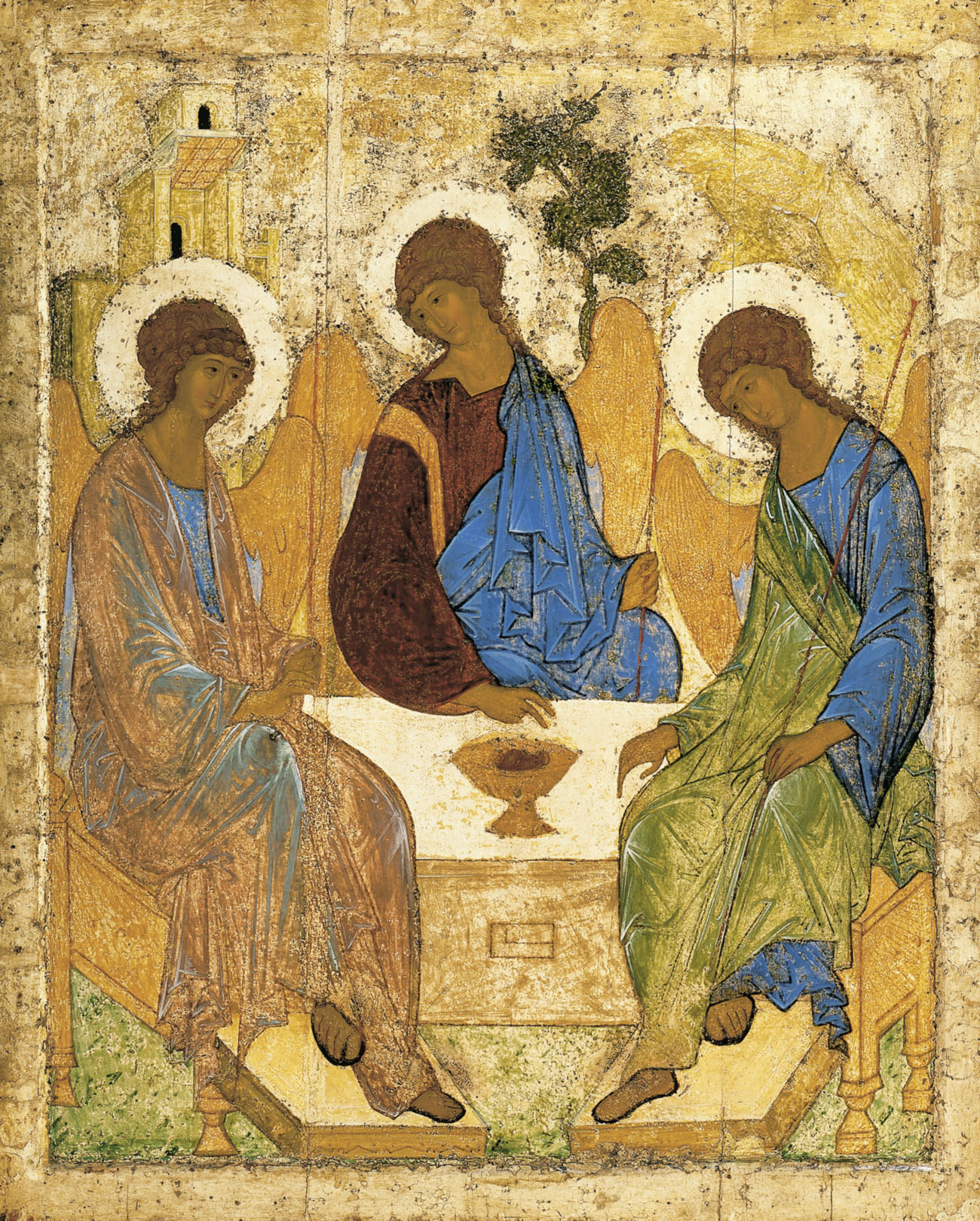
The Trinity is one of those mysteries that is hard to get one’s mind around. We proclaim that there is only one God – and then we name God as Father, Son and Holy Spirit – which implies a threeness – as depicted in the famous Rublev icon of the Trinity opposite. This form of addressing God – which has biblical precedent from passages such as Matthew 28:19 – raises other issues for us as it sounds quite patriarchal to our contemporary culture. And yet here we are on Trinity Sunday, invited to reflect on who God is for us and what it means to be God’s people in the world.

Something that may surprise you is that trinitarian thinking came very early in the life of the church. The apostle Paul was using a trinitarian blessing within 20 years of Jesus’ death – what we know as the Grace from 2 Cor 13:13 – ‘May the grace of our Lord Jesus Christ, the love of God and the communion of the Holy Spirit be with you all’. From a very early date baptism was carried out in the name of the Father, Son and Spirit.

What sort of response might we make to these truths about God?


We will be holding a Zoom worship meeting this Sunday morning from 9.45 am. I will host the meeting from my home but it will be an opportunity to hold a larger (virtual) gathering and to see each others’ faces. We will be basing our worship on the attached worship@home resource for this week, so it would be handy to have a copy present. We can send you a link to the meeting or a phone number and meeting details if you sign up by emailing the Croydon UC church office on office@croydon.unitingchurch.org.au.

Click here for worship@home resources
Pentecost – catalyst for change

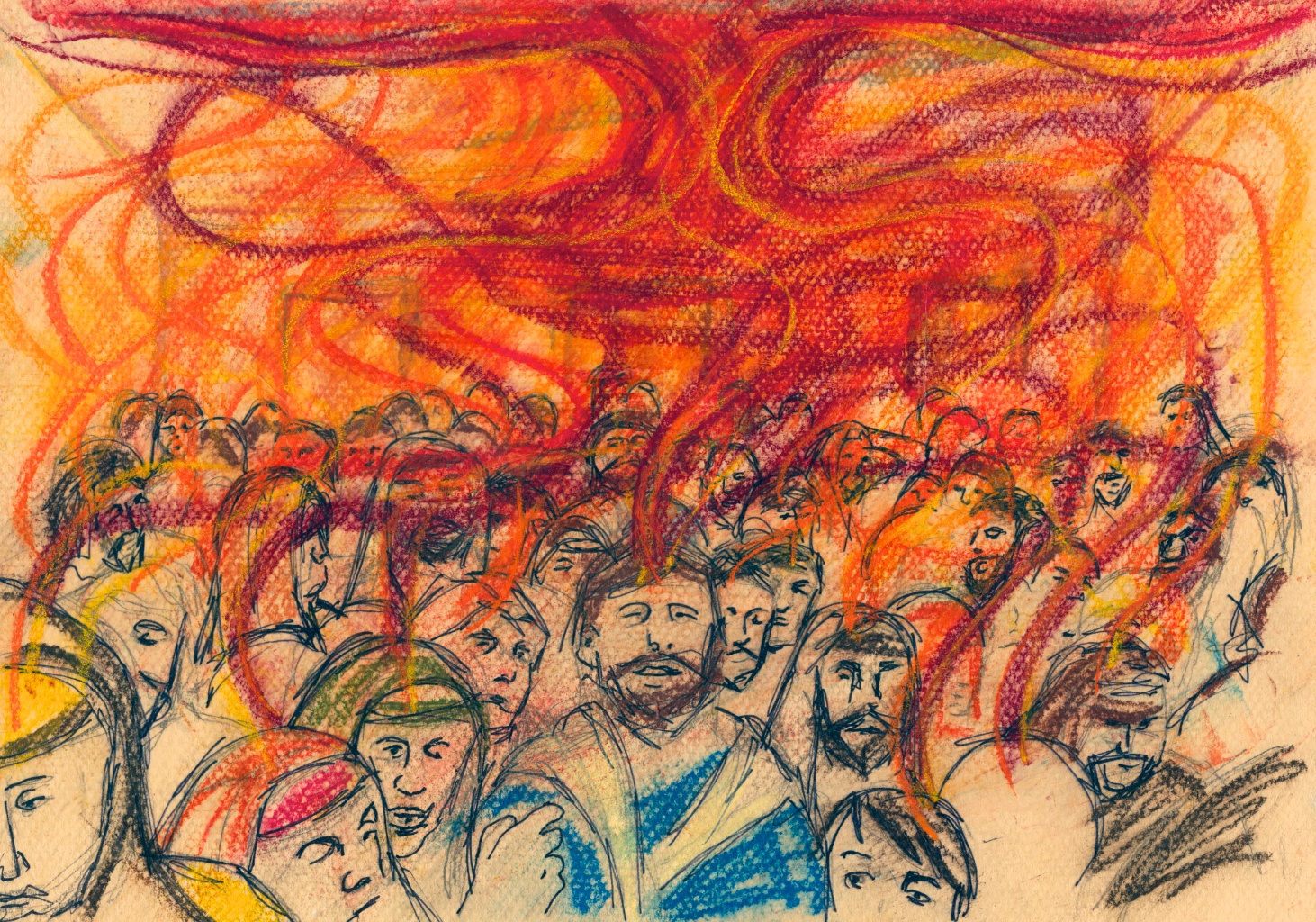
The Pentecost story has several overlapping strands. It’s about God’s promise and presence and power, it’s about praise and prophecy, and it’s also about people and purpose. This week I am focusing on the people aspect and how Pentecost builds community.

Just as we may be feeling lonely, isolated or anxious about the future, just trying to take things one day at a time, so too for the first disciples of Jesus on the day when their world turned upside down, not for the first time. They’d followed Jesus but it hadn’t worked out the way they’d hoped, so they were just hanging in there and hoping and praying about the future.

At Pentecost, the Spirit gave them new courage, new direction and renewed hope for the future. After Peter’s inspiring message about Jesus, prompted by the Spirit, many people embraced the new faith and a vibrant and growing community was born. Everyone was included and people were generous with their hospitality and time and goods.

Like those first disciples, we too are relearning some of the behaviours that build community. Many families are reconnecting through spending more time together, friends are keeping in touch over the phone, people are slowing down and talking to their neighbours, others are taking the time to listen and some are rediscovering old ways of cooking and growing vegetables. There has been a new kindness movement happening.

But Pentecost also brought creative changes prompted by the Spirit, new possibilities, new ways of being God’s people in the world. And so in these days, we also have found new means of connecting such as by Zoom. How many of us even knew what this involved two months ago?

Pentecost was a catalyst for change, although many challenges remained ahead for the emerging community. So I wonder how our current situation will help us make lasting change towards a new more equitable and compassionate future. How will we better align ourselves with God’s ways after this pandemic is over? How can all of us in this country learn to truly sing together that we are all Australian and that we do share a common dream?


This Sunday we will not be meeting by Zoom for worship. Instead we encourage people to watch and participate in the collaborative service prepared by Heathmont, Ringwood, Ringwood North and our two Croydon congregations. You will see and hear from several familiar faces from Croydon and Croydon North, including a message from Rev Peter. To log in to the service go to the following website https://nruc.online.church/ before 10 am.

If you are unable to join us to participate online, click here for worship@home resources

After the streamed service we will be having a virtual morning tea of Croydon and Croydon North people by Zoom using the same log in details as previously. We can send you a link to the meeting if you sign up by emailing the Croydon UC church office on office@croydon.unitingchurch.org.au.

Being witnesses to Jesus

https://alittleperspective.com/wp-content/uploads/2014/02/act-1-8-stock-9x.jpg

The reading that we are focusing on this week comes from the opening chapter of Acts, the second book in Luke’s two volume story about Jesus. This second book begins with the ascension of Jesus and goes on to tell the story of Jesus’ followers as they proclaim the good news of Jesus in word and in action, starting from Jerusalem and finally reaching Rome.

In the opening passage from Acts, Jesus commissions the disciples for their new role, that of being witnesses. It is as if Jesus is handing on the relay baton to them.

But just what are they to be witnesses of? Based on the many stories recounted in Acts, their witness is focused on the death and resurrection of Jesus, who is to be regarded as both Messiah and Lord, and also on his message of good news about the kingdom of God. After a momentous start in Jerusalem on the day of Pentecost, their witness gradually expands geographically and also racially as more and more Gentiles (i.e. non-Jews) embrace the message.

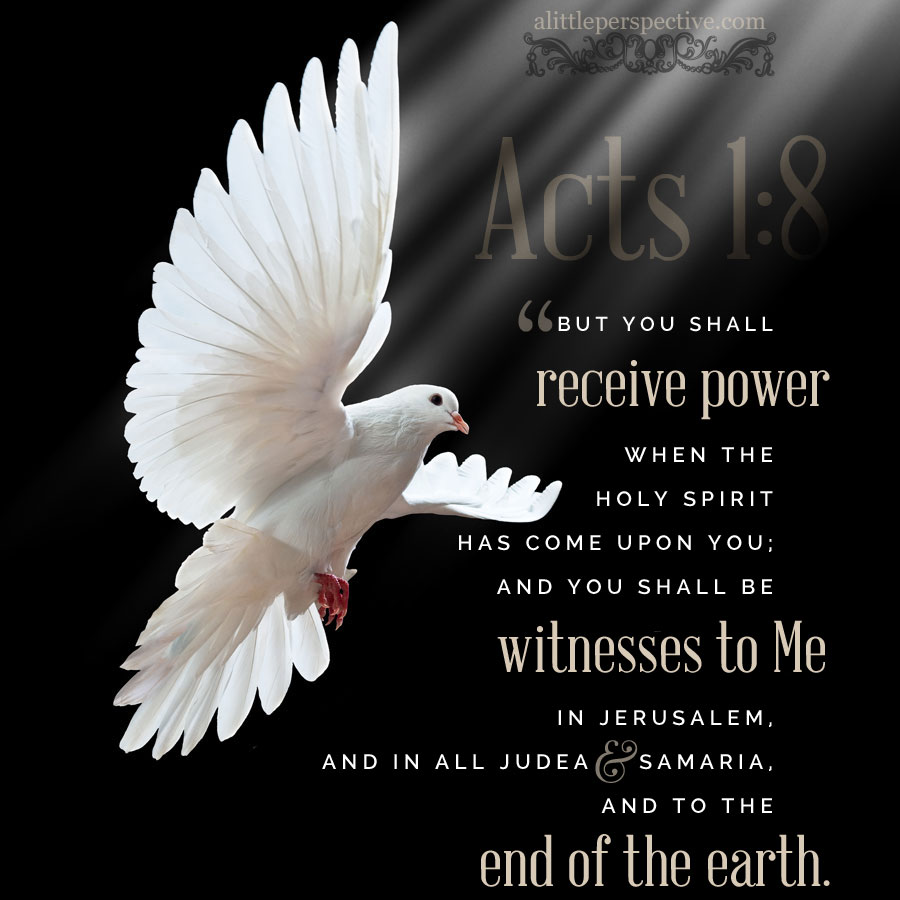
In order to equip them for their witnessing task, Jesus urges them to wait for the gift of the Holy Spirit, who will provide them power. The Greek word used here is dunamis, from which we derive English words such as dynamo and dynamite, and it may mean might, strength or ability. One demonstration of power comes in the Pentecost story as Peter is given the words and the courage to stand up and proclaim a message about Jesus. On other occasions the apostles demonstrate power for compassion and for healing. And throughout the book of Acts, there is another dimension of power demonstrated, namely power to form community. In each instance, the Holy Spirit supplies what they need at the time.

The question for us as we reflect on this passage is how we are called to be witnesses of Jesus in our context and situation. Obviously our witness will be quite different from the original disciples since we did not physically witness events like the cross and the resurrection of Jesus. So how best to be witnesses is a challenge for every generation of Jesus’ followers.

As we contemplate our call to ‘proclaim by word and example the good news of God in Christ’ – which is part of the baptism liturgy and therefore applicable to every baptised follower of Jesus – we may want to ponder what help we most need from the Holy Spirit. Is it courage to speak? Is it compassion? Is it the perseverance and energy to form community? As we do so, we might also recall Jesus’ promise to be with us always, and to remember that we are Easter people who know and serve a living Lord

Living the life Jesus promised

How do we live the life Jesus spoke about and experience the peace he promises to give? How do we express our love for Jesus? And what is the role of the Holy Spirit in connecting us with Jesus and with God? These are all questions that arise from our Gospel reading this week from John chapter 14.

There is a small phrase that is easy to miss in this week’s reading: because I live, you also will live. Yes, Jesus is going away and the disciples are anxious and troubled. But Jesus will not leave them alone as orphans in the world, adrift and separated from God’s love. Rather, looking ahead to his rising to new life, Jesus promises that God will send the Holy Spirit in his name to live within and amongst the disciples – for always. This is how they will continue to live in the way of Jesus even when he is no longer physically present with them. The Spirit will remind them of all that Jesus taught and especially the command to love one another.

Rather than seeing this command as a duty or a prerequisite for experiencing God’s loving presence, Jesus turns it all around. Because of God’s love – illustrated through the ministry and ultimately in the death of Jesus for his friends – we respond in a similar way by loving and serving one another. As we do this, we will live the life Jesus spoke of – the abundant and overflowing life – even as God’s Spirit brings us into the heart of relationship with God. That is when we will also experience the deep and abiding peace that Jesus promised.

Our current circumstances with corona virus provide us a way to better understand this message. Living in the way of Jesus – the way of love – will not shield us from suffering or anxious thoughts or uncertainty about how the next few weeks and months may turn out. But it may just give us the peace we need and the assurance that God – and indeed Jesus – is with us every faltering step of the way.

How have you been experiencing this peace in these challenging times?

What new ways are you finding to love and serve others?

And what are you learning about Jesus and yourself in the process?


This week is another collaborative streamed service at 10 am from the Maroondah Uniting Churches, prepared mostly by the Ringwood congregation. Go to https://nruc.online.church/ to watch the service. We will follow this with morning tea by Zoom for Croydon and Croydon North people. Email the Croydon office for details to join us.